Qualified in Europe. Accountable in Europe.
Qualified in Europe, Supplied from Europe
Importing deposition consumables yourself costs you three to eight weeks of lead time and an unpredictable duty position. Here is what buying from a European supplier who carries that side of the transaction changes in practice.

- Dispatch
- From inside the EU
- Typical EU transit
- 2–4 working days
- UK delivery
- Customs handled, DDP available
- Repeat lead time
- From 2 weeks
The lead time problem nobody prices in
- 2–4 days
- Typical EU road transit
- 60–70%
- Metal left in a spent target
- 24 h
- Quote turnaround

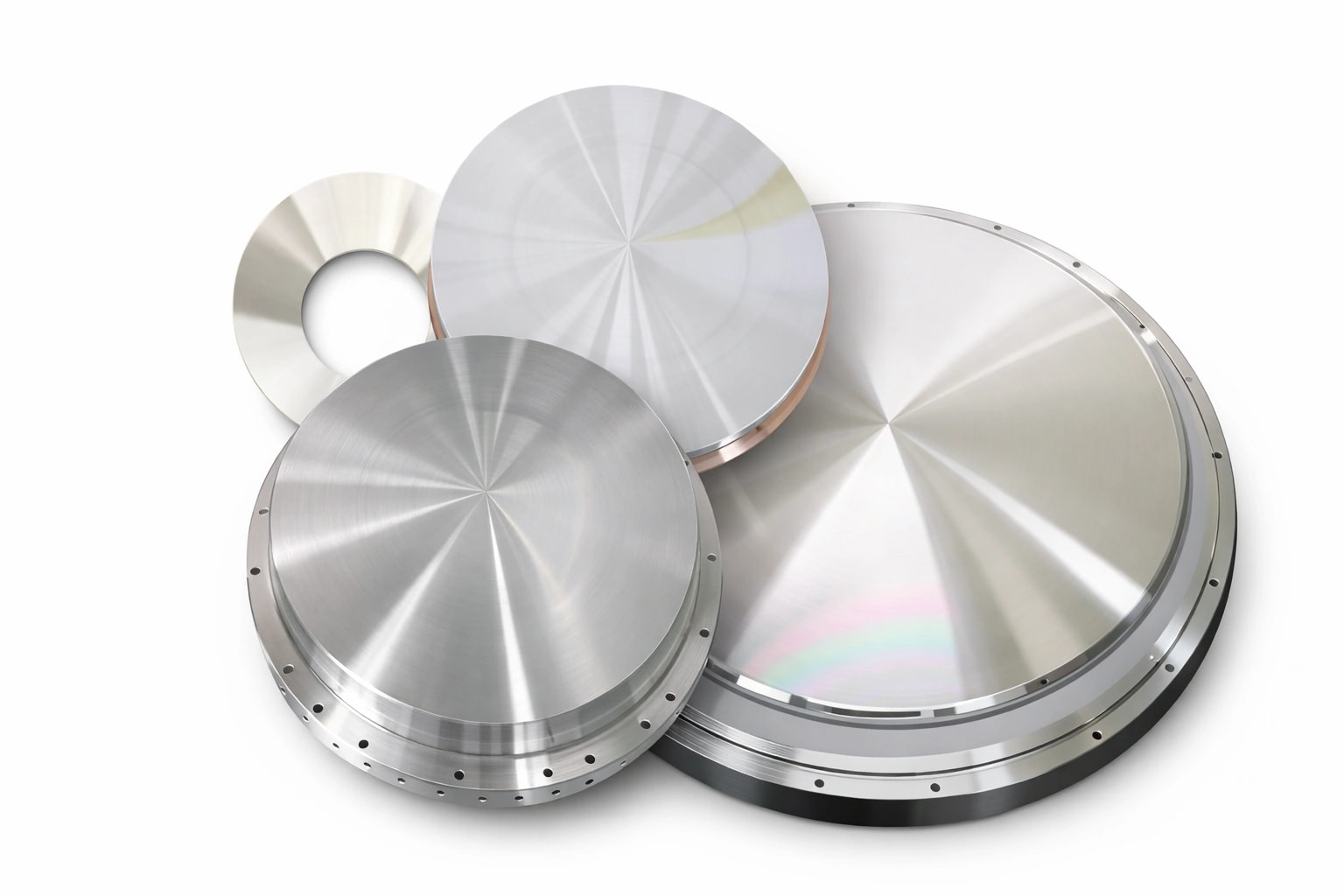
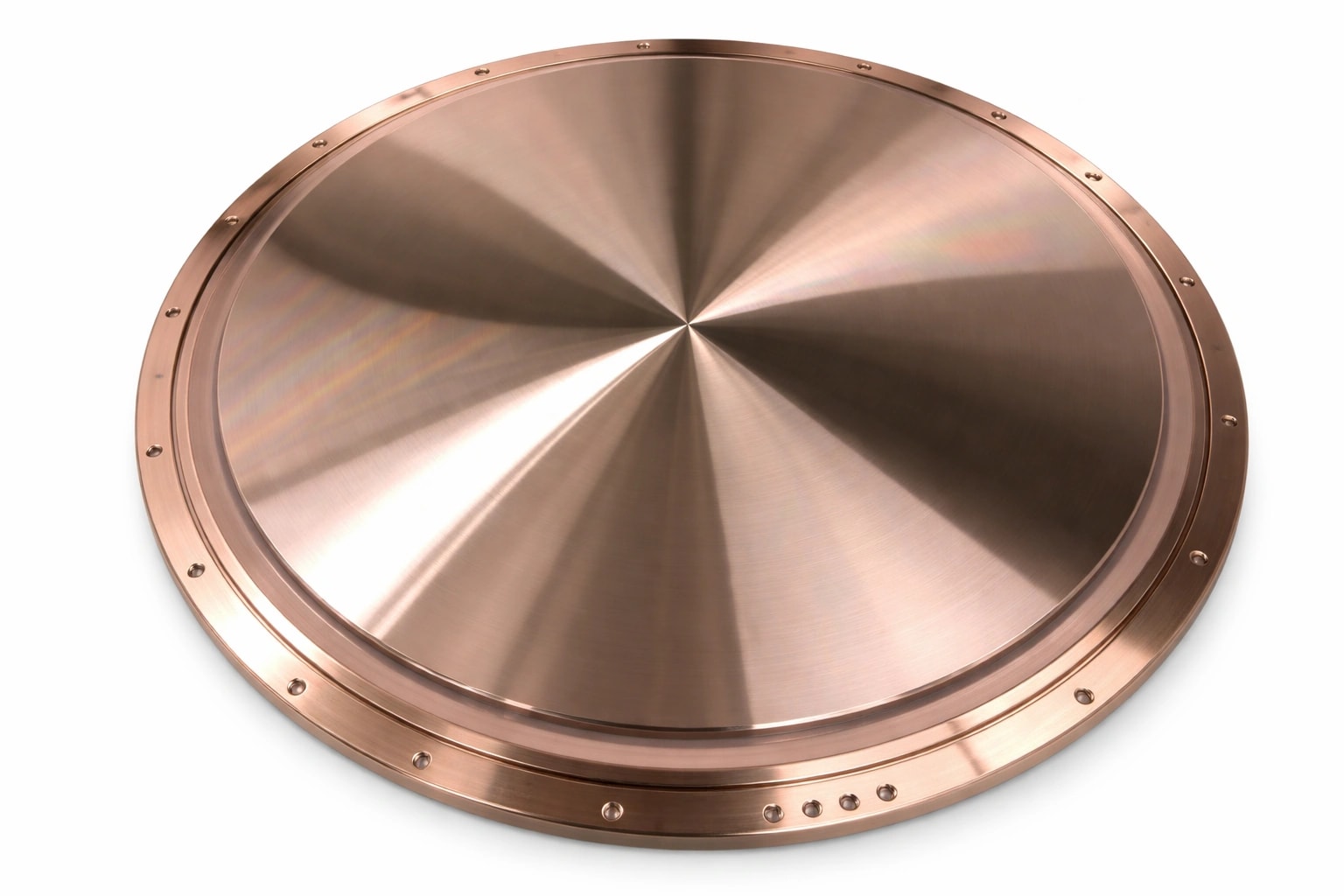
A sputtering target is not a capital purchase, it is a consumable with a failure mode. It arcs, it cracks, it debonds, it erodes through in a hot spot before its nominal life. When that happens on a production line, the only number that matters is how fast the replacement arrives.
Importing it yourself, a repeat order typically means four to eight weeks of production plus two to five weeks of sea freight, or an air freight bill that erases the unit-price saving several times over. Buying it from us, the lead time printed on the product page is the whole number: production, qualification and, where the material is imported, the import itself are all inside it. Then it is a two-to-four-day truck from inside the EU, because by the time it ships to you the customs entry is already done and it was ours to make.
Procurement compares unit prices because unit prices are visible. Line downtime, expedited air freight and safety stock carrying cost are all real and all invisible on the quote. On a consumable you cannot run without, those three usually exceed the unit-price difference.
Duty, VAT and the paperwork nobody wants
Goods already in free circulation inside the customs union move to you with no further import duty and no clearance step. Where duty was payable on the way in, it was paid by us as importer of record and it is inside the price we quoted. That is not a marginal administrative convenience — it moves an entire category of delay and an entire category of unbudgeted cost off your side of the transaction.
Outside the customs union the paperwork is ours rather than yours. UK customers get DDP delivery with the declarations handled at our end — covered in full on our UK supply page — and Swiss and Norwegian customers get EFTA documentation as standard. Either way the quote shows a landed price rather than an ex-works price that grows on arrival.
- Intra-EU: no further duty, no clearance step, VAT handled under reverse charge with a valid VAT number.
- UK: DDP available, customs declarations handled at our end, landed price quoted up front.
- Switzerland and Norway: EFTA documentation prepared as standard.
- Export documentation, certificates of origin and material declarations supplied without being asked.
Where we ship

Germany, France, the Netherlands, Belgium, Italy, Spain, Austria, Switzerland, Poland, the Czech Republic, Denmark, Sweden, Norway, Finland, Ireland and the United Kingdom are routine destinations. Semiconductor fabs, display and glass coaters, optics manufacturers, research institutes and analytical laboratories.
Technical correspondence is in English. Documentation can be issued in English or German. If you need to talk through a specification in Swedish, that is also fine — we are based in Gothenburg.
Security of supply as a design decision

The last five years made supply chain fragility a board-level topic rather than a purchasing one. Container rates, port congestion, export controls on gallium and germanium, and sanctions-driven rerouting all hit deposition materials directly, because the raw inputs are concentrated in a small number of countries.
A European supplier does not make you immune to raw material scarcity — nobody is. What it does is move the freight, customs and geopolitical routing layers off your side of the transaction and onto ours, and it puts the party accountable for the material in the same time zone as the engineer who has to solve the problem at 8 am.
Frequently asked questions
Do you deliver outside the EU?
Yes. The United Kingdom, Switzerland and Norway are routine destinations: UK shipments go DDP with the customs declarations handled at our end, and Swiss and Norwegian shipments carry EFTA documentation as standard. For destinations outside Europe we quote DAP or DDP so you see a landed price.
Do I pay import duty on materials delivered inside the EU?
No. We dispatch from inside the EU, so the goods are already in free circulation and reach you without a further duty charge or a clearance step. Where duty was payable on import it was paid by us, as importer of record, and it is already in the price we quoted. VAT is handled under the reverse charge when you give us a valid VAT number, so the invoice you receive is the whole cost.
If the material is not all made in Europe, what is European about it?
The standard it is qualified against and the counterparty who is answerable for it. Every product is qualified against our European quality standards before it ships, whatever its manufacturing origin: REACH for what we place on the EU market, EU import requirements met by us as importer of record, and a certificate of analysis with measured values for the batch you receive. If the origin of a particular part matters for your own compliance file, ask and we will tell you.
Is buying through a European supplier more expensive than importing direct?
On unit price, sometimes yes. On total cost, frequently not — once you include air freight on expedited replacements, the duty and customs exposure you then carry yourself, clearance delays, the safety stock you have to hold against an eight-week replenishment, and the line downtime when a target fails early. For R&D quantities the difference is small; for production consumables it usually favours a supplier who is already inside the customs union and takes the import risk.
Can you hold stock to our specification?
Yes. Tell us your consumption rate and we will hold agreed quantities of your specification, called off against a blanket order. This is the single most effective way to remove target lead time from your risk register, and it costs you nothing beyond the commitment to consume.
Get a landed price, not an ex-works price
Send your specification and delivery address. You get unit price, lead time, duty position and transit time in one reply, within 24 hours.
Drawings, STEP files and photographs can be attached to the form. Prefer to talk it through? Leave a phone number and ask for a call.
What to include
- Material, grade and purity you need
- Dimensions, tolerances or a drawing
- Quantity and the date you need it
No drawing? Send photographs of the worn part — we can work from that.