Innovation
Materials Development and Custom Work
Most of what we make does not exist in a catalogue. Custom alloys, unusual geometries, difficult bonds and pilot quantities are the normal case, not the exception.
- Pilot quantity
- From one piece
- Alloy targets
- Binary, ternary, to spec
- Bonding
- Indium, elastomer, diffusion
- First sample
- Typically 4–8 weeks
Where standard products stop
A catalogue serves the middle of the market. It does not serve the group developing a new ternary alloy for a magnetic memory stack, the coater whose cathode was built in 1994 and matches no current target size, or the laboratory that needs a platinum crucible in a shape no supplier lists.
Those are the requests we are built around. If you can describe the material, the geometry and what the film has to do, we can usually make it — and where we cannot, we will say so in the first reply rather than after six weeks of silence.
Custom alloy and compound targets
Alloy targets are harder than they look. The film composition tracks the target composition closely, but the target composition has to survive melting, casting and thermo-mechanical processing without segregating — and different elements have different sputter yields, so the as-deposited film is never quite the as-cast ratio.
We work from the film composition you need rather than the target composition you guessed, and we adjust the charge accordingly. Binary and ternary metal alloys, doped oxides such as AZO and GZO, and mixed-oxide ceramics are all routine. For anything genuinely novel we start with a small melt and a characterisation round before committing to a full plate.
- AlSi, AlCu, AlSiCu at your specified ratio, including low-copper variants.
- NiCr, NiV, CoCrPt and other magnetic stack alloys.
- AZO, GZO and doped ITO variants where standard 90:10 does not meet the sheet resistance target.
- Ceramic and mixed-oxide targets pressed and sintered above 99% of theoretical density.
Geometry, bonding and the awkward cases
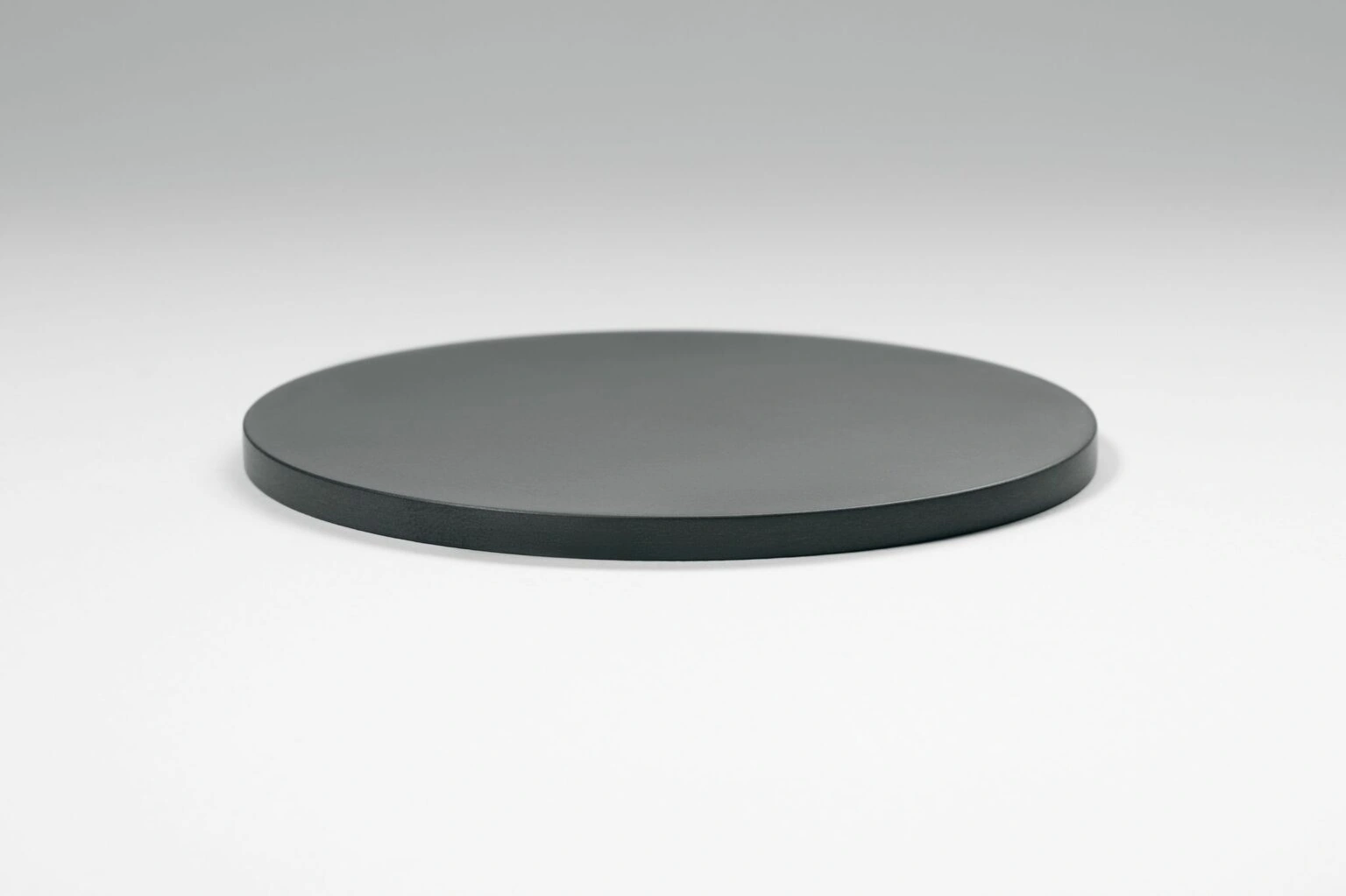
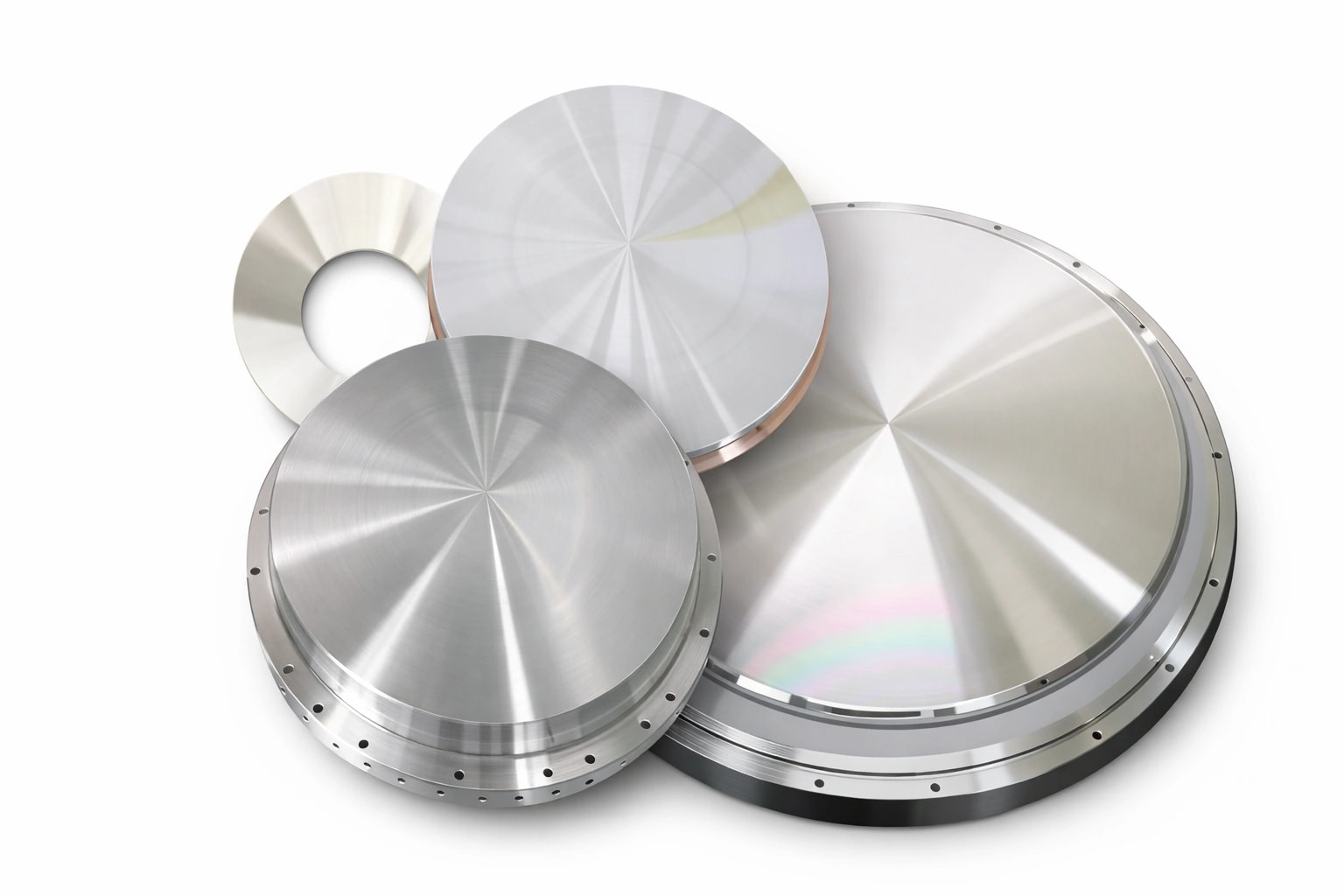
Rotary targets up to four metres, segmented or monolithic. Planar plates from 20 mm to 600 mm. Discs, rings, annuli, stepped profiles and targets with integrated cooling features. If your cathode is old, unusual or built in-house, send a drawing or a photograph with a scale reference and we will work from that.
Bonding is where most target problems actually originate. Indium bonding gives the best thermal conductivity but softens above roughly 150 °C. Elastomer tolerates more heat with worse heat transfer. Diffusion bonding suits specific material pairs and high power densities. We select the bond for your power density rather than defaulting to indium, and we ultrasonically inspect coverage before shipping.
We also rebond. A spent target plate on a sound backing plate is often worth recovering: we strip, recover the residual metal, and bond a fresh plate to your existing backing. On precious metal targets that is routinely the cheapest way to buy a new target.
How a development project runs
First, a technical conversation — what the film has to do, which tool, what has failed before. Second, a feasibility reply with a realistic route, a price and an honest statement of what we are unsure about. Third, a pilot piece with full characterisation: measured purity by GDMS or ICP-MS, measured density, grain structure, bond inspection. Fourth, your process trial. Then production, with the specification frozen and documented so that plate number fifty behaves like plate number one.
That last part is the one that gets skipped elsewhere. A development sample that works and a production specification that reproduces it are two different deliverables, and the second one is what protects your yield eighteen months later.
Frequently asked questions
Will you make a single custom target for an R&D project?
Yes. Single pieces and pilot quantities are a large part of what we do, and they are quoted on the same terms as production work. The unit price is naturally higher than a production run, but there is no minimum quantity and no development fee for straightforward custom geometries.
Can you match a target we currently buy elsewhere?
Usually. Send the drawing, the certificate of analysis from your current supplier and, if possible, a spent plate. From those three we can match material, dimensions, bond type and backing plate. Where we would specify something differently, we will tell you why rather than silently changing it.
Do you sign NDAs before a development discussion?
Routinely, and we will sign yours rather than insisting on ours. Alloy compositions, film stacks and tool details stay confidential as a matter of course; we do not use customer development work as case study material without written permission.
How long does a first custom sample take?
Typically four to eight weeks depending on material and geometry. Custom alloys that need a melt trial sit at the longer end; unusual machining on a standard material sits at the shorter end. You get a realistic date in the feasibility reply, not an optimistic one that slips.
Describe the material you cannot buy
Composition, geometry, tool, and what the film has to do. You get a feasibility answer within 24 hours — including an honest no, where that is the answer.
Drawings, STEP files and photographs can be attached to the form. Prefer to talk it through? Leave a phone number and ask for a call.
What to include
- Material, grade and purity you need
- Dimensions, tolerances or a drawing
- Quantity and the date you need it
No drawing? Send photographs of the worn part — we can work from that.