
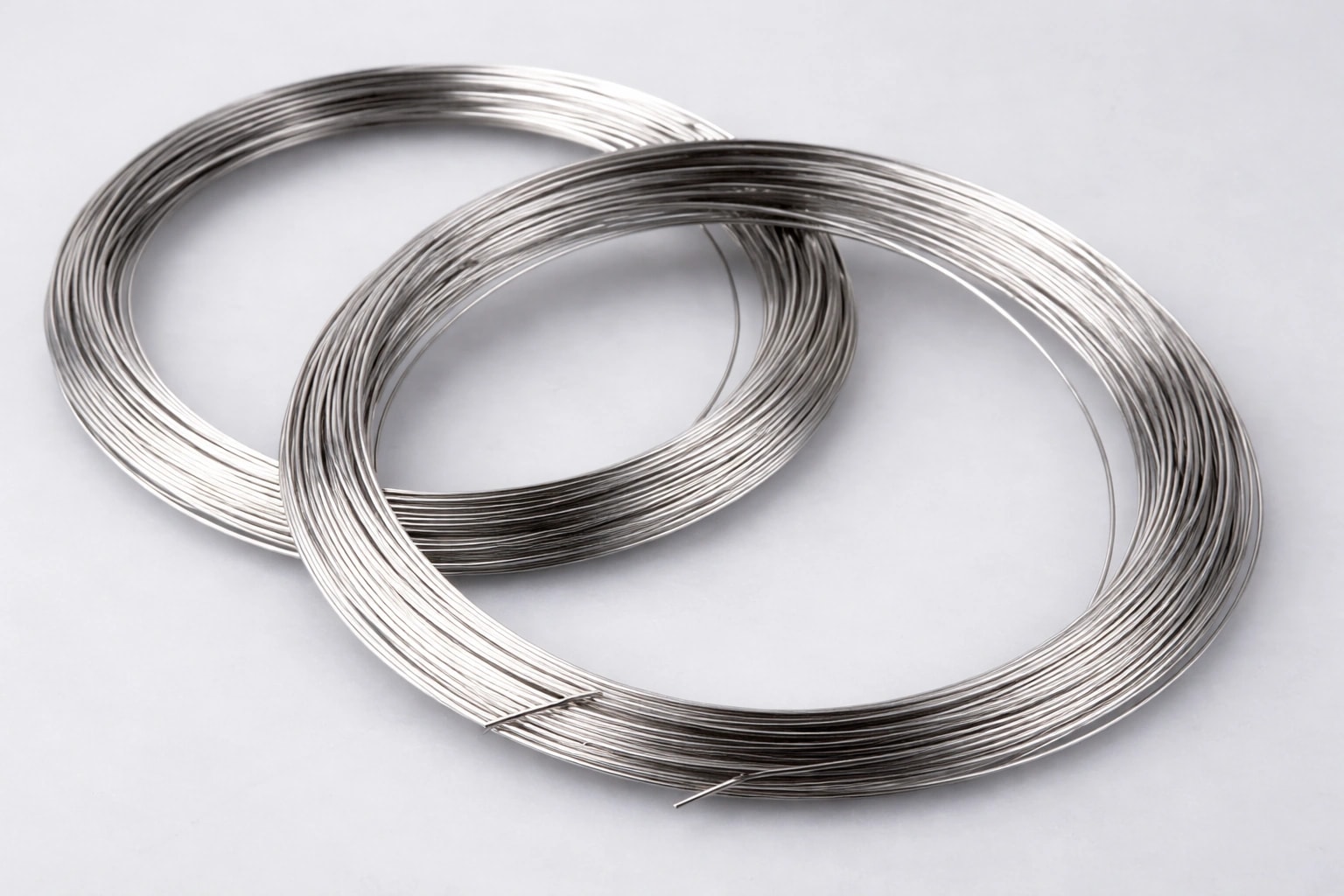
Type R and Type S at a glance
Both are noble-metal thermocouples: a platinum–rhodium alloy leg against a pure platinum leg. The only construction difference is how much rhodium the alloy leg carries — 13% for Type R, 10% for Type S. That small change shifts the output curve enough to matter.
| Type S | Type R | |
|---|---|---|
| Positive leg | Pt/Rh 90:10 | Pt/Rh 87:13 |
| Negative leg | Pure platinum | Pure platinum |
| Normal range | 0–1600 °C | 0–1600 °C |
| EMF at 1000 °C | 9.587 mV | 10.506 mV |
| EMF at 1600 °C | 16.777 mV | 18.849 mV |
| Sensitivity at 1000 °C | about 12 µV/°C | about 13 µV/°C |
| Tolerance, IEC 60584 Class 1 | ±1 °C to 1100 °C | ±1 °C to 1100 °C |
EMF values are for a reference junction at 0 °C. Above 1100 °C the Class 1 tolerance widens to ±[1 + 0.003 (t − 1100)] °C for both types.
Why platinum, and what it costs you
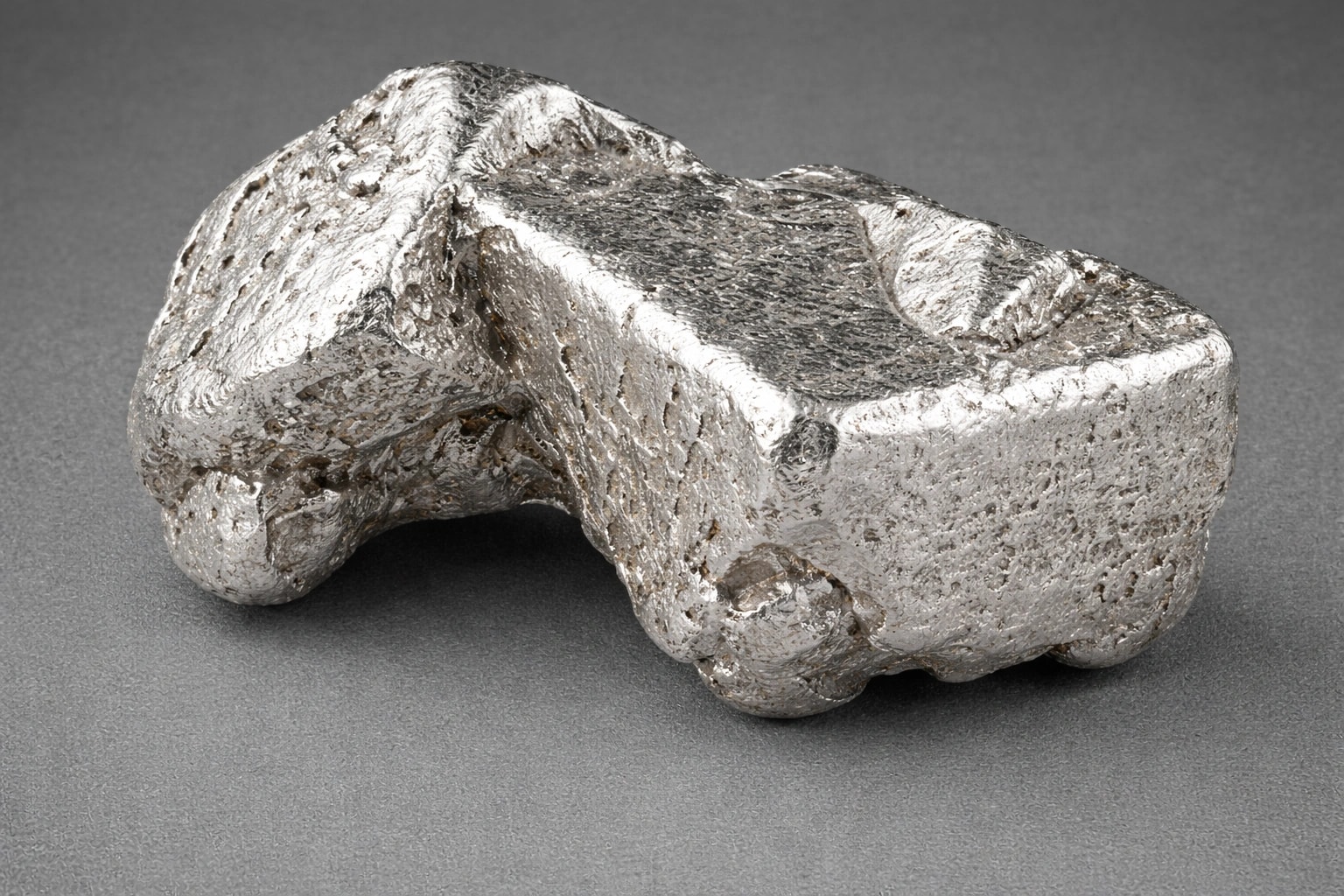
Platinum thermocouples are chosen for stability, not signal. Platinum does not oxidise, keeps its calibration far longer than base-metal types at high temperature, and holds up in the air atmospheres of glass tanks, furnaces and kilns up to 1600 °C. That is why Types R and S are the reference standards used to calibrate other sensors.
The price is a small signal. At around 12–13 µV per degree they produce a quarter to a third of the output of a Type K. The measuring instrument, cold-junction compensation and compensating cable all have to be good enough not to eat the accuracy the wire provides.
Why Type R and Type S are not interchangeable
The instrument converts voltage to temperature using the curve for the type it is set to. Connect the wrong wire and every reading is wrong by a systematic amount that no amount of averaging removes.
At a true 1000 °C, a Type S thermocouple read on an instrument set to Type R reports about 930 °C — roughly 70 °C low. A Type R thermocouple on a Type S setting reports about 1080 °C — roughly 80 °C high. Errors that large are obvious in a calibration lab but easy to miss on a production furnace, where they show up as drifting product quality long before anyone suspects the sensor.
The same applies to compensating cable, which must match the type. The legs look the same and the alloys cannot be told apart by eye, so label spools and spare elements clearly and keep one type per site where you can.
Which one should you choose?
Neither is more accurate in principle — both share the same tolerance classes and the same stability. Type R gives about 10% more signal, which buys marginally better resolution at the instrument. Type S is the older international reference and is still what many calibration procedures name.
In practice the decision is almost always made by what already exists: the instrument configuration, the calibration procedure and the spares on the shelf. Standardise on the type your site already uses. Changing type saves nothing and adds a mix-up risk.
Above about 1600 °C in continuous service, or where rhodium migration is limiting element life, Type B (Pt/Rh 70:30 against Pt/Rh 94:6) is the usual step up. Its output is negligible near room temperature, so it barely needs cold-junction compensation, but it reads poorly below about 600 °C.
Drift: what degrades a platinum thermocouple
A new element that reads correctly will not stay that way. Drift is slow and in one direction, so it is easy to miss without periodic checks.
- Rhodium migration — at high temperature rhodium diffuses from the alloy leg into the pure platinum leg, and rhodium oxide evaporates and redeposits. The EMF difference between the legs falls, and the element reads low.
- Silicon contamination — in reducing atmospheres, silica in low-grade insulators is reduced and silicon dissolves into the platinum. It changes the EMF and makes the wire brittle. Use high-purity alumina insulators and sheaths.
- Other contaminants — phosphorus, sulphur, lead and iron all attack platinum. Keep furnace atmospheres and fluxes away from the hot junction with a gas-tight sheath.
- Cold work and grain growth — bending strains the wire and shifts its EMF; long service at temperature coarsens the grain and embrittles it. Anneal before calibration and handle elements gently.
Recalibrate at intervals set by your temperature and atmosphere, and replace elements that have drifted outside your tolerance class. The platinum in a retired element is not lost: platinum thermocouple scrap is bought back at assay value.
How to specify platinum thermocouple wire
A thermocouple is only as good as the homogeneity of its wire. When you ask for a quote, state each of these so the wire arrives ready to use.
| Item | What to state | Typical |
|---|---|---|
| Type | R or S — decides the alloy leg | Match your instrument |
| Alloy leg | Pt/Rh 87:13 (R) or Pt/Rh 90:10 (S) | One per type |
| Pure leg | 99.99% platinum | Common to both types |
| Diameter | 0.025–3.0 mm, ±1% | 0.35–0.5 mm for industrial elements; finer for fast response |
| Temper | Annealed or hard drawn | Annealed for thermocouples |
| Length | Per leg, in metres | Allow for the cut-back you make at recalibration |
| Tolerance class | As named in your procedure | IEC 60584 Class 1 or 2 |
We draw platinum thermocouple wire in both alloys and pure platinum, with composition controlled to keep EMF within standard tolerance. The same range of platinum components covers crucibles, gauze and electrodes.
Frequently asked questions
What is the difference between a Type R and a Type S thermocouple?
The rhodium content of the positive leg. Type R uses Pt/Rh 87:13 and Type S uses Pt/Rh 90:10, both against pure platinum. Type R produces about 10% more voltage at the same temperature. Range, stability and tolerance classes are the same.
Can I use Type S wire with a Type R instrument?
No. The instrument applies the Type R curve to a Type S signal and reads about 70 °C low at 1000 °C. The reverse reads about 80 °C high. Instrument, wire and compensating cable must all be the same type.
What is the maximum temperature for Type R and Type S thermocouples?
Both are specified to 1600 °C in continuous use and can tolerate brief exposure somewhat higher. Platinum melts at 1768 °C. For sustained work above 1600 °C, Type B (Pt/Rh 70:30 against Pt/Rh 94:6) is the usual choice.
Why is my platinum thermocouple reading low?
Most often rhodium migration or contamination. At high temperature rhodium moves from the alloy leg into the pure platinum leg and the output falls. Silicon from low-grade insulators in a reducing atmosphere speeds this up sharply. Recalibrate, and check that insulators and sheaths are high-purity alumina.
What diameter of wire is used for platinum thermocouples?
Industrial elements are typically 0.35–0.5 mm per leg, which balances cost, strength and life at temperature. Finer wire responds faster but drifts and breaks sooner; laboratory and fast-response sensors go down to 0.1 mm or less.
Talk it through with an engineer
If this guide has not answered your question, describe your process and we will tell you what we would specify — including when the answer is that you do not need what you were about to buy.
Drawings, STEP files and photographs can be attached to the form. Prefer to talk it through? Leave a phone number and ask for a call.
What to include
- Your deposition process and tool
- Film requirement or the problem you are solving
- Volumes, if you know them
No drawing? Send photographs of the worn part — we can work from that.