

ITO FOR SOLAR CELLS
Indium tin oxide is widely used as a transparent conductive electrode in thin film solar cells. Its combination of electrical conductivity and optical transparency enables efficient light transmission while supporting charge collection within photovoltaic systems.

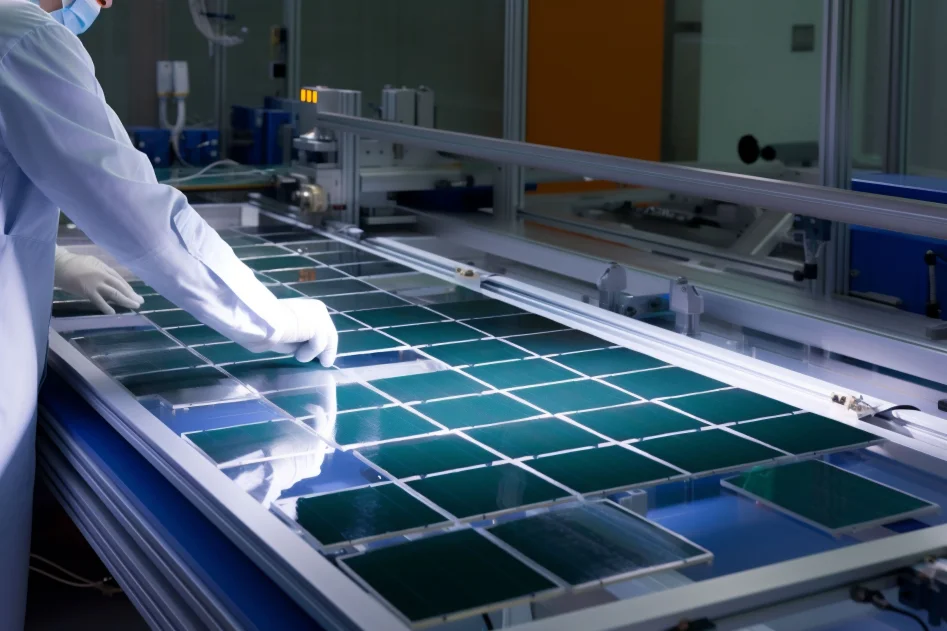
THE ROLE OF ITO IN SOLAR CELL ARCHITECTURE
In thin film solar cells, ITO functions as a transparent front electrode. Positioned between incoming light and the active photovoltaic layer, it must allow maximum light transmission while efficiently transporting electrical current.
The balance between low sheet resistance and high optical transmission is critical. Even small variations in film thickness or composition can influence overall device efficiency and power output.

WHY ITO IS USED IN THIN FILM SOLAR TECHNOLOGY
ITO offers a strong combination of electrical conductivity, transparency and process compatibility. When deposited as a thin film using sputtering techniques, it provides uniform surface coverage and stable electrical performance.
Compared to alternative transparent conductive oxides, ITO enables lower resistivity at controlled thickness, which supports improved energy conversion efficiency in certain photovoltaic designs.
DEPOSITION METHODS FOR ITO SOLAR COATINGS
ITO films used in solar cells are typically deposited using magnetron sputtering, a vacuum-based physical vapor deposition method. This technique allows precise control of film thickness, composition and surface morphology.
Controlled deposition parameters are essential to optimize both transparency and conductivity while maintaining adhesion and mechanical stability on glass or flexible substrates.
ITO IN VARIOUS THIN FILM SOLAR TECHNOLOGIES
ITO is commonly integrated into several photovoltaic architectures, including amorphous silicon, CIGS and emerging perovskite solar cells. In each case, the transparent conductive layer must be tailored to the specific device structure and processing conditions.
Material purity, compositional control and target density influence the final film properties and long term operational stability.
.

INDUSTRIAL CONSIDERATIONS FOR PHOTOVOLTAIC PRODUCTION
Large-scale solar module manufacturing requires consistent thin film performance across wide substrate areas. Stable sputtering targets and controlled ITO powder characteristics contribute to predictable deposition rates and repeatable film properties.
Scalable material supply and batch consistency are essential for maintaining production efficiency and minimizing downtime in photovoltaic manufacturing lines.
ITO MATERIALS FOR SOLAR CELL MANUFACTURING
Whether you are developing thin film photovoltaic technologies or scaling industrial solar production, our technical team can help specify the appropriate ITO powder or sputtering target for your process requirements.