
Materials
High Purity Graphite Components & Custom Machined Parts
Isostatic graphite parts machined to drawing in Europe — crucibles, saggers, susceptors, fixtures and porous components, down to 5 ppm ash.
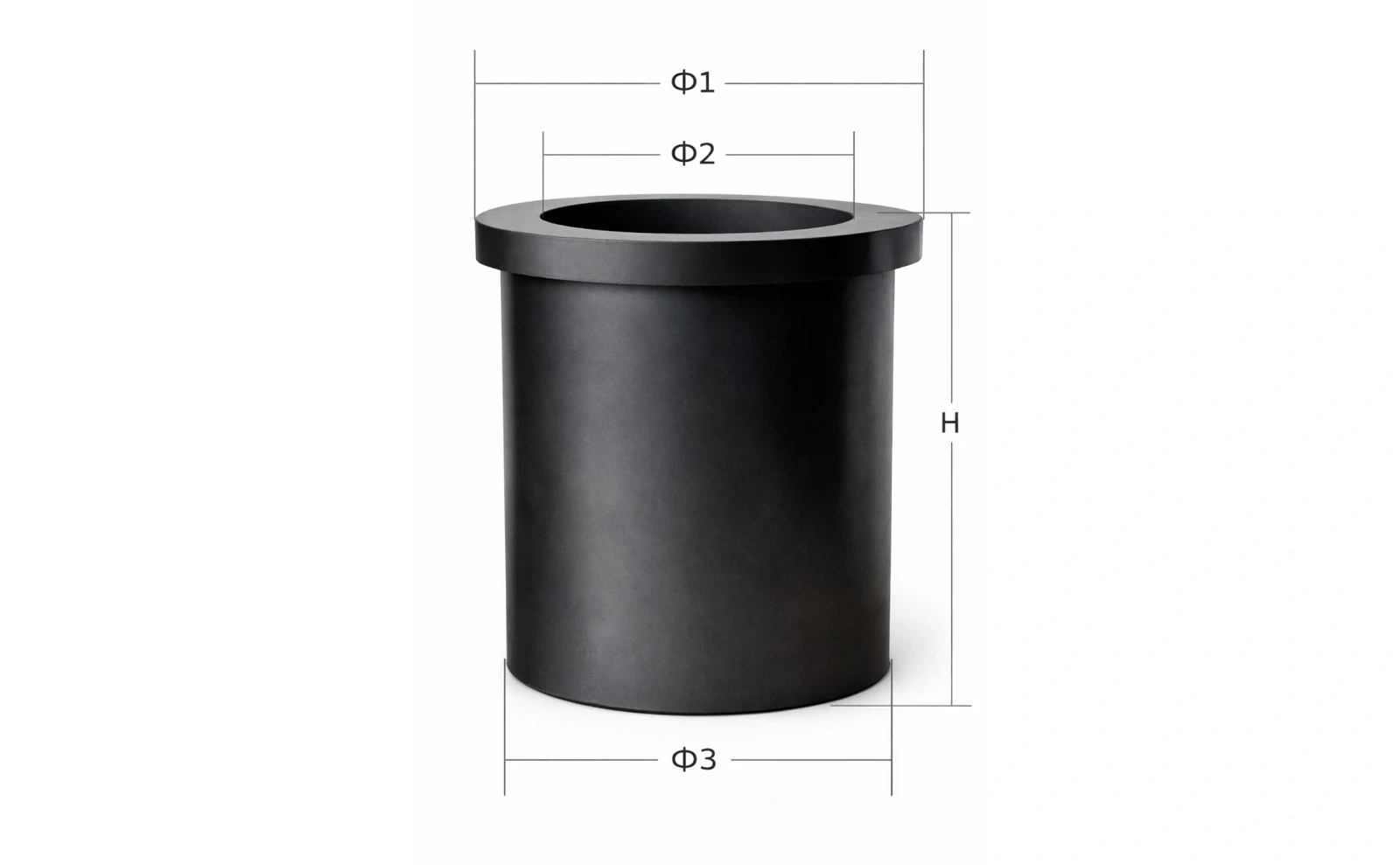
- Material
- Isostatic graphite, fine and ultra-fine grain
- Ash content
- ≤ 20 ppm standard, ≤ 5 ppm purified
- Density
- 1.75 – 1.90 g/cm³
- Grain size
- ≤ 10 µm, ultra-fine ≤ 4 µm
Purity up to 99.999%
5N material with certificate of analysis
Quote within 24 h
Technical review by materials engineers
Shipped from Europe
Dispatched inside the EU, customs handled at our end
Custom dimensions
Built to your tool and bonding spec
Range
Industrial graphite products we machine to drawing
Every item below is made to order — dimensions, purity and bonding are yours to specify.
≤ 20 ppm ash (high purity ≤ 5 ppm) · 3–5 weeks
Graphite Crucible
Fine-grain isostatic graphite crucibles, including porous grades, machined to your drawing in Europe.
Specs and quote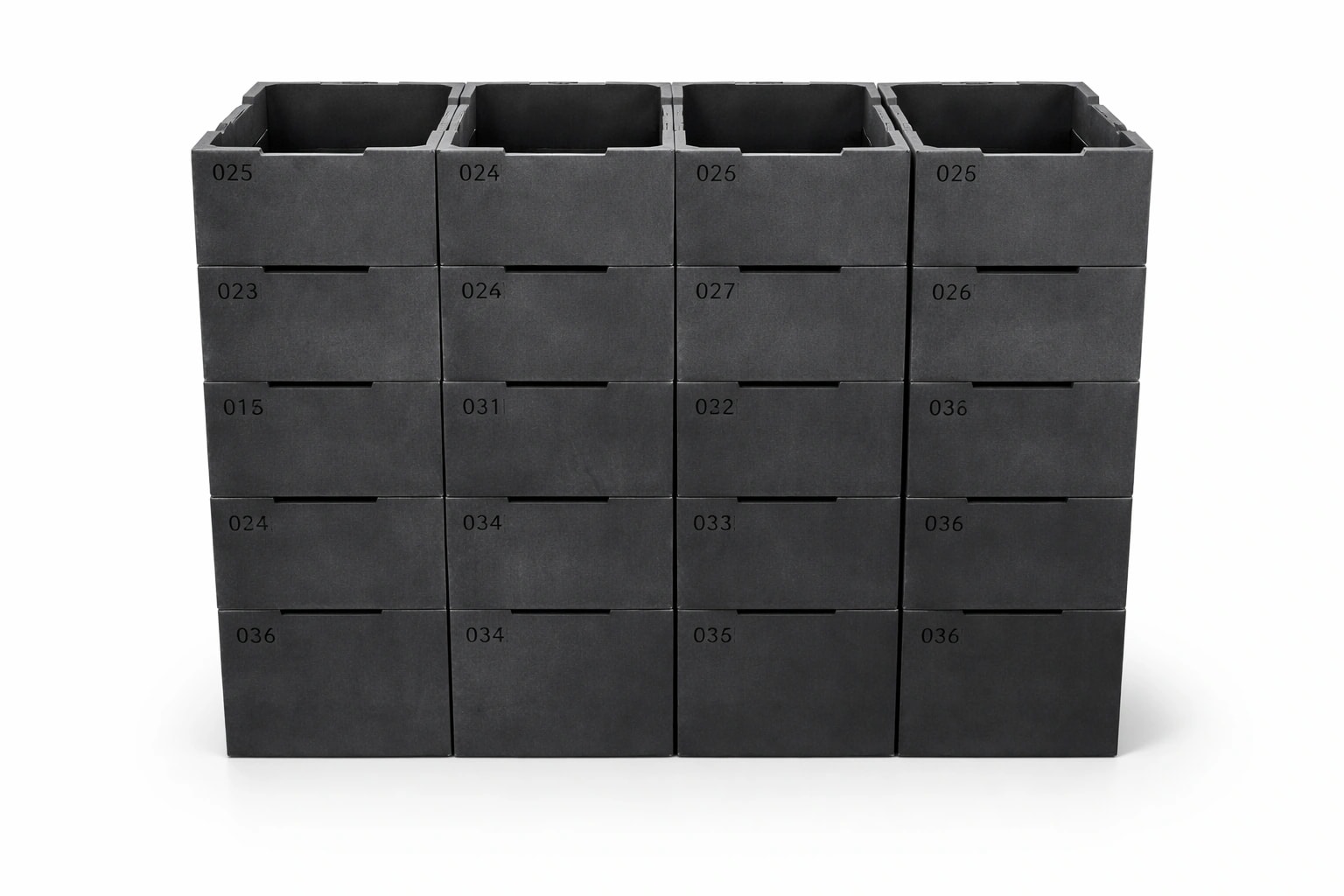
≤ 20 ppm ash (high purity ≤ 5 ppm) · 4–6 weeks
Graphite Sagger Box
Isostatic graphite saggers and trays for cathode material calcination — longer cycle life than ceramic, with no alkali contamination.
Specs and quoteWhat decides the performance of high density graphite components
Graphite is the default material for high-temperature work below about 2500 °C, and the reason is a combination no other material offers: it survives thermal shock that cracks every ceramic, conducts heat better than most metals, machines like a soft metal into complex shapes, gets stronger as it gets hotter, and costs a fraction of tungsten or molybdenum.
What varies enormously between graphite grades is grain size, density and purity — and those three determine what the part can actually do. Isostatic graphite, pressed uniformly from all directions, has fine uniform grains and isotropic properties, which is why it machines to tight tolerances and behaves predictably in every direction. Extruded graphite is cheaper but coarser and directional, which shows up as a rough surface and unpredictable behaviour in demanding applications.
Purity is stated as ash content — the residue after burning. Standard grades run 200–500 ppm; our components start at ≤20 ppm, and purified grades reach ≤5 ppm. For semiconductor, crystal growth and battery cathode work, ash content directly limits what contaminates your product, so it is a specification to set deliberately rather than accept by default.
We machine every component to drawing in Europe, from high density graphite parts at 1.90 g/cm³ to porous grades. Graphite crucibles, sagger boxes, susceptors, heating elements, jigs, moulds, fixtures and porous parts — if you can draw it, we can machine it in graphite, and if you cannot draw it, send us the worn part and we will work from that.
Graphite machining to your drawing
Most of our graphite work is custom graphite machining: a drawing, a STEP file or a worn part comes in, and a finished component in the right grade goes back. Isostatic graphite is what makes that practical — its fine, uniform grain holds sharp edges, thin walls and tight tolerances, and it cuts the same way in every direction.
Grade comes before geometry. If the drawing does not name a grade we will recommend one, because grain size and ash content decide whether the part works far more often than the dimensions do. This is where we usually start:
| Part | Usual grade | Why |
|---|---|---|
| Crucibles and melting pots | Fine-grain isostatic, ≤ 20 ppm ash | Thermal shock resistance and a smooth wall. ≤ 5 ppm purified for crystal growth. |
| Sagger boxes and trays | Isostatic, ≤ 5 ppm purified | No alkali contamination of battery cathode material, and a longer cycle life than ceramic. |
| Susceptors and heating elements | Fine-grain isostatic, 1.80–1.90 g/cm³ | Isotropic properties, so heating is uniform and the part behaves the same in every direction. |
| Jigs, moulds and fixtures | Ultra-fine grain, ≤ 4 µm | Thin walls, intricate geometry and a fine machined surface. |
| Gas diffusers, degassing parts, vacuum chucks | Porous graphite, 15–30% open porosity | Gas has to pass through the body of the part rather than around it. |
Tolerances down to ± 0.05 mm on request, with SiC or pyrolytic carbon coating where the furnace atmosphere is marginal. Send the drawing, the STEP file or the worn part itself with the quote request — the full envelope is in the capability table below.
How to choose
Which density and grain size?
Fine grain at ≤10 µm and 1.80–1.90 g/cm³ covers most work: good machinability, tight tolerances, smooth surface. Ultra-fine at ≤4 µm is worth the premium for thin walls, intricate geometry and where surface finish matters. Coarser extruded grades suit large simple shapes where cost dominates.
What ash content do you need?
≤20 ppm suits general high-temperature and metal-melting work. Move to ≤5 ppm purified grades for semiconductor processing, crystal growth, optical materials and high-nickel battery cathodes — anywhere a trace metal contaminant shows up in your product specification.
Do you need a coating?
Graphite oxidises above roughly 500 °C in air. SiC and pyrolytic carbon coatings slow that down and reduce carbon pick-up into the process. In a properly inert furnace the benefit is small; in a kiln with oxygen ingress, a coating can transform component life. It is a mitigation, not a substitute for atmosphere control.
Dense or porous graphite?
Dense graphite is the default for structural and containment parts. Porous graphite, with 15–30% open porosity, is a distinct product for gas diffusion, degassing molten metal, filtration and vacuum chucks — anywhere gas must pass through the body of the part rather than around it.
Manufacturing capability
The envelope we work within. If your requirement sits outside it, ask anyway — most limits here are standard-product limits, not process limits.
| Material | Isostatic graphite, fine and ultra-fine grain |
|---|---|
| Ash content | ≤ 20 ppm standard, ≤ 5 ppm purified |
| Density | 1.75 – 1.90 g/cm³ |
| Grain size | ≤ 10 µm, ultra-fine ≤ 4 µm |
| Machining tolerance | ± 0.05 mm on request |
| Coatings | SiC, pyrolytic carbon |
Graphite Components — frequently asked
What makes graphite high purity, and how is it measured?
Purity is stated as ash content — the inorganic residue left after burning the graphite. Standard industrial grades run 200–500 ppm. High-purity components start at ≤20 ppm, and chemically purified grades reach ≤5 ppm. For semiconductor, crystal growth and battery applications, that figure directly limits what can contaminate your product.
Do you make custom graphite parts from our drawing?
Yes — custom machining is most of what we do. Send a drawing, a STEP file, or simply the worn part you want replaced. We machine to ± 0.05 mm where required, and we will advise on grade selection if the drawing does not specify one, since grain size and ash content usually matter more than the geometry.
What is the difference between isostatic and extruded graphite?
Isostatic graphite is pressed uniformly from all directions, giving fine uniform grains and identical properties in every direction. It machines to tight tolerances and behaves predictably. Extruded graphite is cheaper but has coarser, aligned grains, which means directional properties and a rougher machined surface. For precision components, isostatic is the right answer.
At what temperature can graphite components be used?
Up to about 2500 °C in vacuum or inert atmosphere — and unusually, graphite gets stronger as it gets hotter. In air, the limit is roughly 500 °C, above which it oxidises and is progressively consumed. High-temperature use therefore requires atmosphere control; SiC coatings extend air tolerance but do not remove the constraint.
Will graphite contaminate my process with carbon?
It depends on the material in contact. Carbon dissolves readily in molten iron, nickel, cobalt, titanium and the refractory metals, so graphite is a poor choice there. For aluminium, copper, precious metals, zinc and most oxides, carbon pick-up is negligible. A SiC coating reduces it where the case is marginal.
Request a quote for graphite components
Send your specification and a materials engineer will price it — not a sales form auto-reply. Quotes for graphite components are returned within 24 hours.
Drawings, STEP files and photographs can be attached to the form. Prefer to talk it through? Leave a phone number and ask for a call.
What to include
- Material, grade and purity you need
- Dimensions, tolerances or a drawing
- Quantity and the date you need it
No drawing? Send photographs of the worn part — we can work from that.
Also manufactured
Other materials we make in Europe
Same certificate of analysis, same quote turnaround, one supplier.
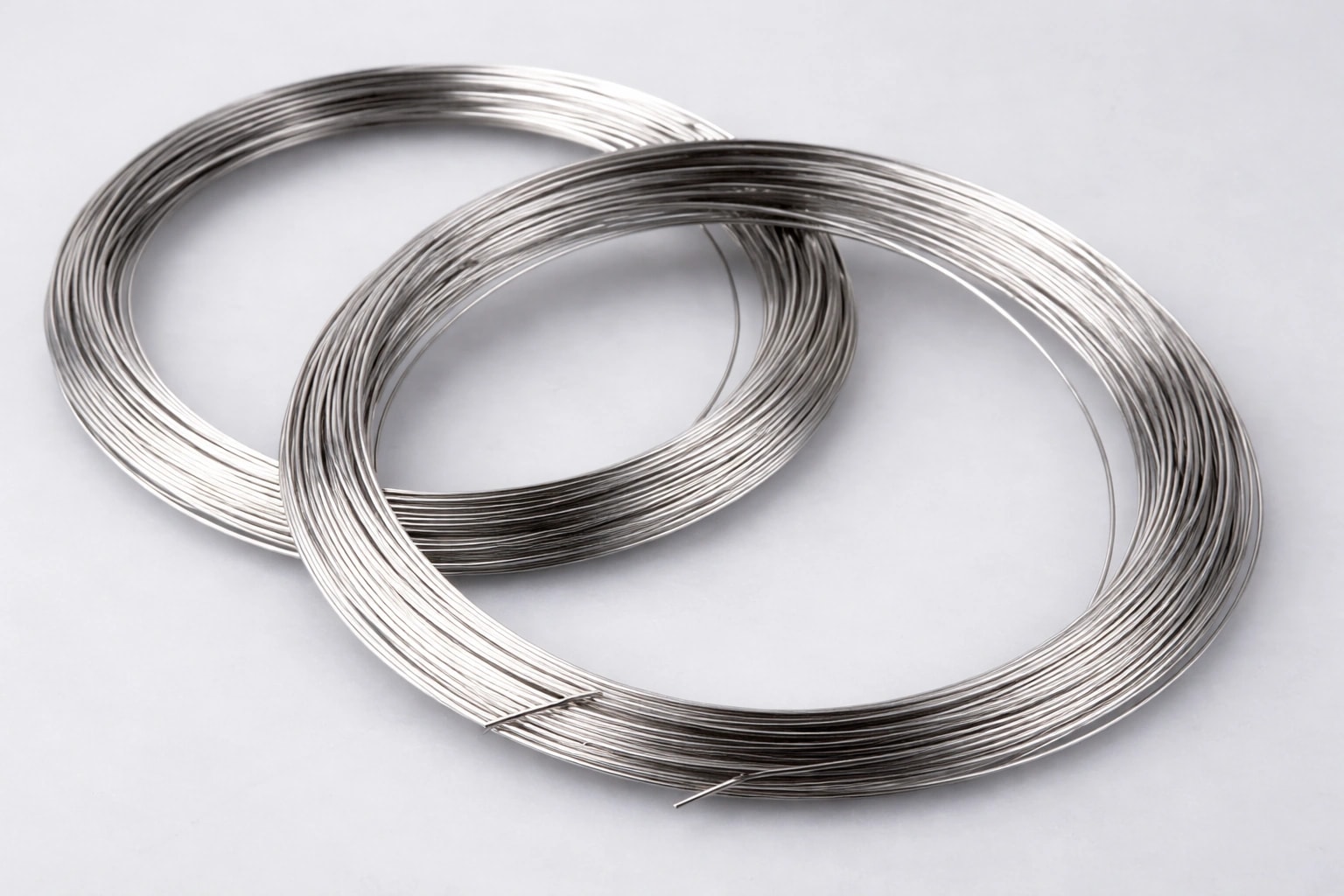
99.95% Pt, Pt/Au 95:5, Pt/Rh 90:10 and 87:13, Pt/Ir
Platinum Components
Platinum labware and fabricated parts — crucibles, dishes, wire, gauze and electrodes — hand-formed and machined to drawing, with buy-back on everything you return.
Specifications & quote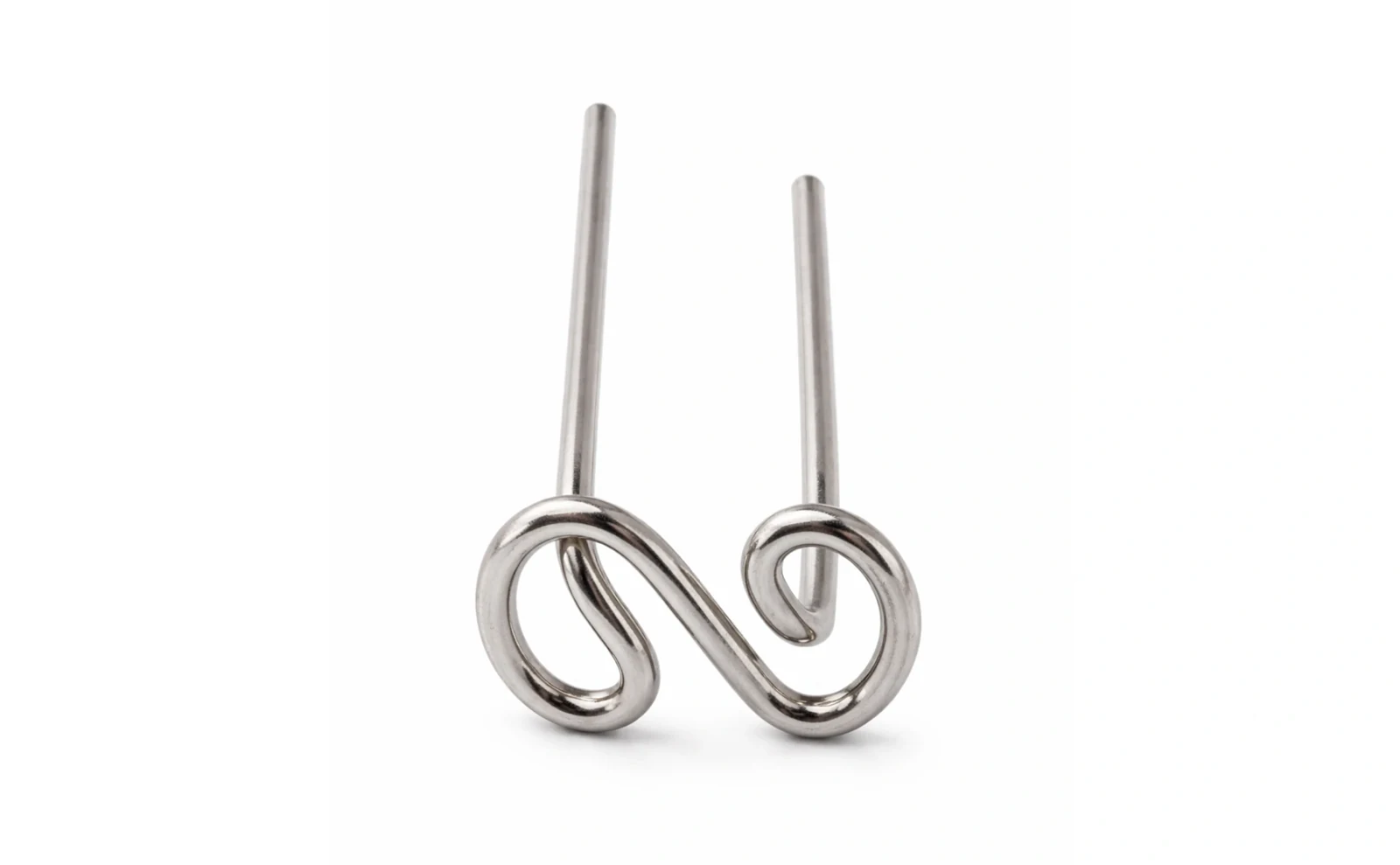
99.95% W minimum, doped (AKS) available
Tungsten Components
Tungsten boats, crucibles, filaments, pins and electrodes at 99.95% purity — formed, wound and machined to your drawing in Europe.
Specifications & quote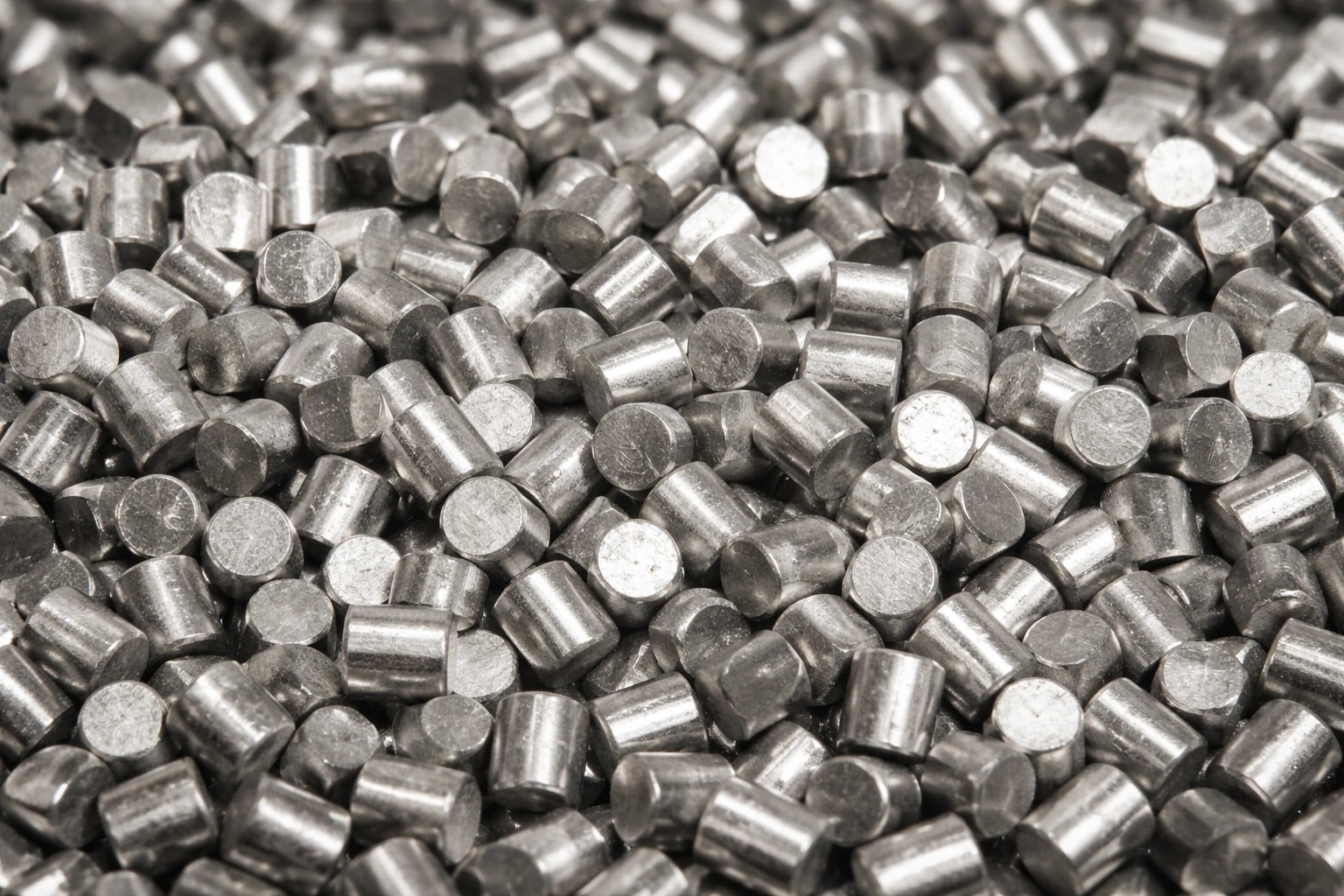
99.99% – 99.999% (4N – 5N)
Evaporation Materials
Pellets, slugs, shot, corn and wire in 4N and 5N purity — sized to your crucible and hearth, supplied from Europe.
Specifications & quoteTechnical guides
Read before you specify
Written by the engineers who quote these parts, not by a content agency.
8 min read
Electron Beam Evaporation: Pockets, Liners and Materials
How e-beam evaporation works, when it beats thermal evaporation, and how to match pocket size, crucible liner and charge form to Al, Cu, Ti, Ni, Co and Cr.
Read the guide
8 min read
Thin Film Deposition Methods: Sputtering vs Evaporation
Sputtering, thermal evaporation, e-beam and CVD compared — coverage, adhesion, rate and cost, with guidance on which method suits which film and substrate.
Read the guideAlso searched as: high purity graphite parts, high density graphite components, graphite custom parts, industrial graphite products, machined graphite components.