
Evaporation Materials
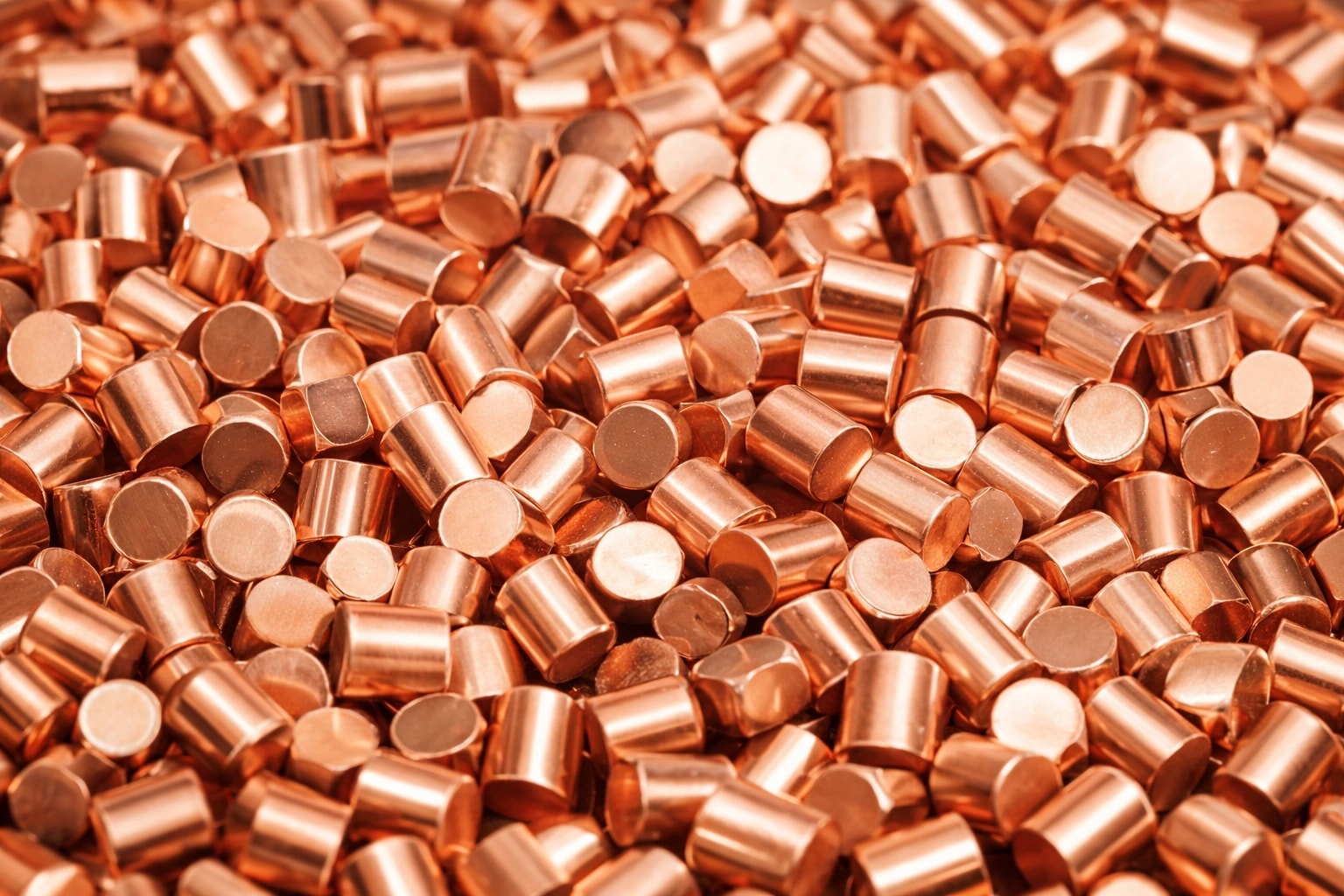
Copper Evaporation Pellets & Slugs (Cu, 4N5)
Oxygen-free copper pellets for conductive and seed-layer evaporation, cleaned and vacuum packed for a stable rate.
- Purity
- 99.995% (4N5)
- Lead time
- 2–3 weeks
- Qualified in
- Europe
- Documentation
- Certificate of analysis per batch
Purity up to 99.999%
5N material with certificate of analysis
Quote within 24 h
Technical review by materials engineers
Shipped from Europe
Dispatched inside the EU, customs handled at our end
Custom dimensions
Built to your tool and bonding spec
About copper evaporation pellets
Evaporated copper produces the conductive layers used in electronics packaging, RF components, sensors and optical coatings. Compared to sputtering, evaporation gives a more directional flux — useful for lift-off patterning, where sidewall coverage must be avoided.
Copper's high melting point relative to aluminium means most users run it from an e-beam source. Resistive boats work but must be molybdenum or tungsten and will alloy over time.
As with sputtering targets, oxygen is the variable that matters: dissolved oxygen produces spitting as trapped oxide decomposes, and it raises film resistivity. We supply OFHC material below 10 ppm oxygen.
Copper Evaporation Pellets specifications
Standard specification below. Anything on this table can be changed — send us your drawing or tool model and we will quote to it.
| Purity | 99.995% (4N5), 99.9999% (6N) on request |
|---|---|
| Form | Pellets, slugs, shot, wire |
| Pellet size | Ø3 × 3 mm to Ø12 × 12 mm |
| Oxygen content | < 10 ppm (OFHC grade) |
| Melting point | 1085 °C |
| Typical source | E-beam pocket, molybdenum or tungsten boat |
Copper material datasheet
Published constants for copper — the numbers you need to set up a run before the material arrives. Print this page for the process folder, or send it to us with your parameters and we will tell you whether the grade we stock suits them.
Chemical identity
| Material | Copper |
|---|---|
| Symbol | Cu |
| CAS number | 7440-50-8 |
| Atomic number | 29 |
| Atomic weight | 63.546 |
| Appearance | Copper, metallic |
Physical and thermal properties
| Theoretical density | 8.92 g/cm³ |
|---|---|
| Melting point | 1,083 °C |
| Thermal conductivity | 400 W/m·K |
| Coefficient of thermal expansion | 16.5 × 10⁻⁶/K |
| Z ratio (QCM) | 0.437 |
Evaporation process data
| E-beam | Excellent |
|---|---|
| Thermal evaporation techniques | Boat: Mo, W · Coil: W · Basket: W · Crucible: Al₂O₃, Mo, Ta |
| E-beam crucible liner | Graphite, molybdenum |
| Temperature at 10⁻⁸ Torr | 727 °C |
| Temperature at 10⁻⁶ Torr | 857 °C |
| Temperature at 10⁻⁴ Torr | 1,017 °C |
| Suggested QCM crystal | Alloy |
| Process notes | Evaporates from any source material. Adhesion is poor — use an interlayer (Cr). |
Values above are published material constants for process planning and can vary with grade, microstructure and measurement method. They are not a supply specification — what we guarantee on your order is the specification table above and the certificate of analysis shipped with it.
Source: Kurt J. Lesker Company, deposition materials data. CAS numbers from the public chemical registry entry for each element.
Applications
Lift-off metallisation
Directional copper deposition for patterned conductors where sidewall coverage would prevent clean lift-off.
Electronics packaging
Under-bump metallisation and redistribution layers in advanced packaging.
RF and microwave components
Low-loss conductive layers on ceramic and polymer substrates.
Sensors and MEMS
Electrode and interconnect layers where thickness control is tight.
What we can change for you
- Pellet and slug sizes matched to your e-beam pocket volume.
- OFHC 4N5 as standard, 5N and 6N for resistivity-critical work.
- Copper shot and wire where a different feed geometry suits the source.
- Vacuum packaging to preserve the cleaned surface.
Technical notes
Low oxygen content suppresses spitting and keeps deposited film resistivity close to bulk copper.
Cleaned, vacuum-packed surface gives a stable rate from the first run.
Uniform pellet mass makes charge calculation and thickness prediction repeatable.
Copper Evaporation Pellets — questions we get asked
Can copper be evaporated from a resistive boat?
Yes, but with caveats. Copper melts at 1085 °C, so the boat runs hot and molten copper alloys with tungsten and molybdenum, giving a limited number of runs before failure. For anything beyond occasional use, an e-beam source with a liner is more economical and gives better rate control.
Why does my evaporated copper film have higher resistivity than bulk copper?
Usually oxygen — either dissolved in the source material or residual in the chamber. Copper oxidises readily at evaporation temperature. Use OFHC source material, pump to a lower base pressure, and raise the deposition rate so the film grows faster than it can absorb residual gas.
Does copper need an adhesion layer?
On oxide and glass surfaces, yes. Copper adheres poorly to SiO₂ and glass. A thin titanium or chromium layer, typically 5–20 nm, deposited immediately before the copper without breaking vacuum, solves it.
Do you supply 6N copper for evaporation?
Yes, on request. 6N (99.9999%) is worth specifying only where trace metals measurably affect your film — in most evaporation applications 4N5 performs identically at a considerably lower price.
Request a quote for copper evaporation pellets
Send your specification and a materials engineer will price it — not a sales form auto-reply. Quotes for copper evaporation pellets are returned within 24 hours.
Drawings, STEP files and photographs can be attached to the form. Prefer to talk it through? Leave a phone number and ask for a call.
What to include
- Purity grade — 99.995% (4N5) is standard
- Dimensions, tolerances or a drawing
- Quantity and required delivery date
No drawing? Send photographs of the worn part — we can work from that.
Related materials
Often specified alongside this product by the same customers.
99.995% (4N5) · 3–5 weeks
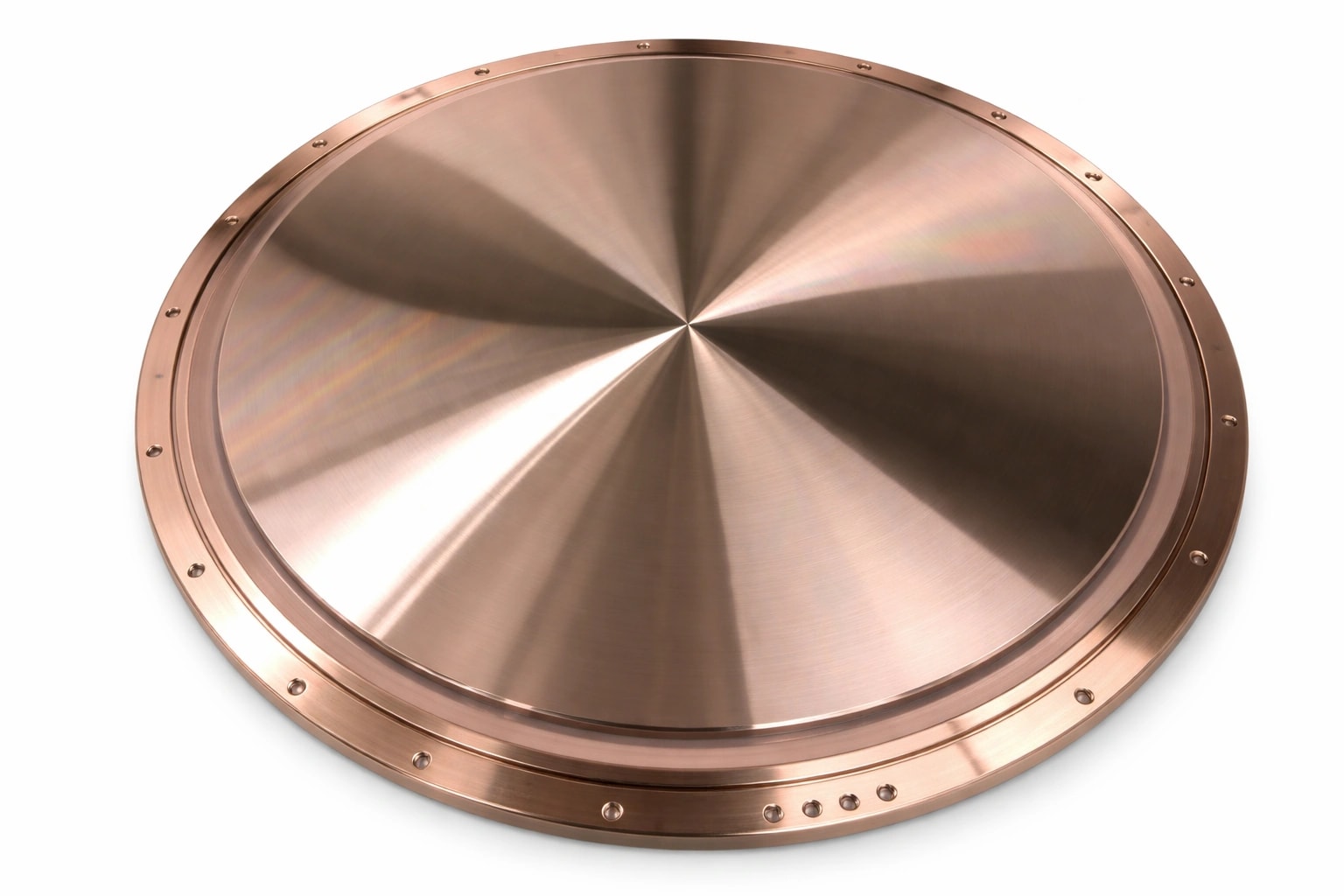
Copper Sputtering Target
Oxygen-free high-purity copper targets for interconnect seed layers and conductive thin films, machined and bonded in Europe.
View details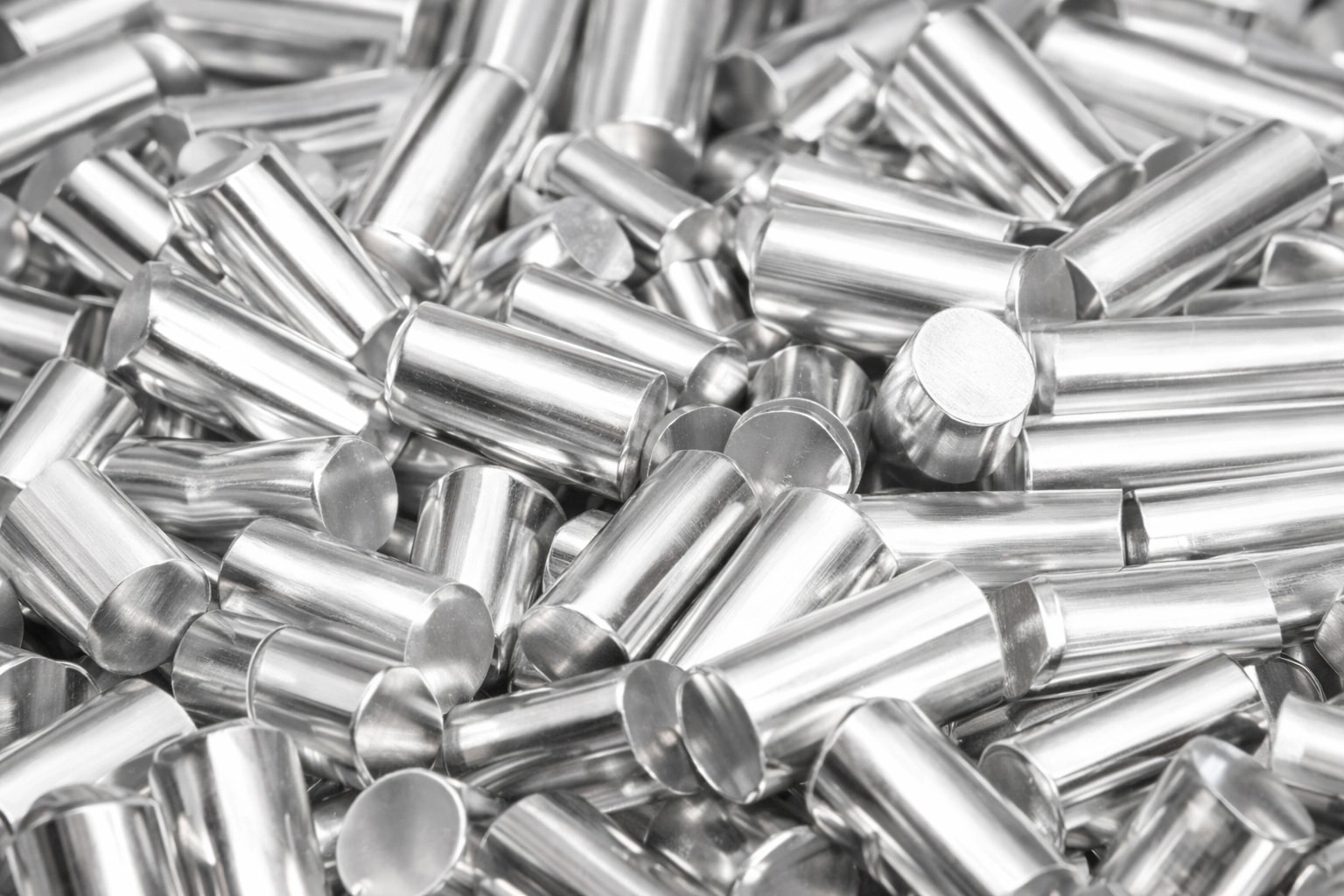
99.995% (4N5) · 2–3 weeks
Aluminium Evaporation Pellets
Clean, oxide-free aluminium pellets sized for e-beam crucibles and tungsten boats, supplied with a certificate of analysis.
View details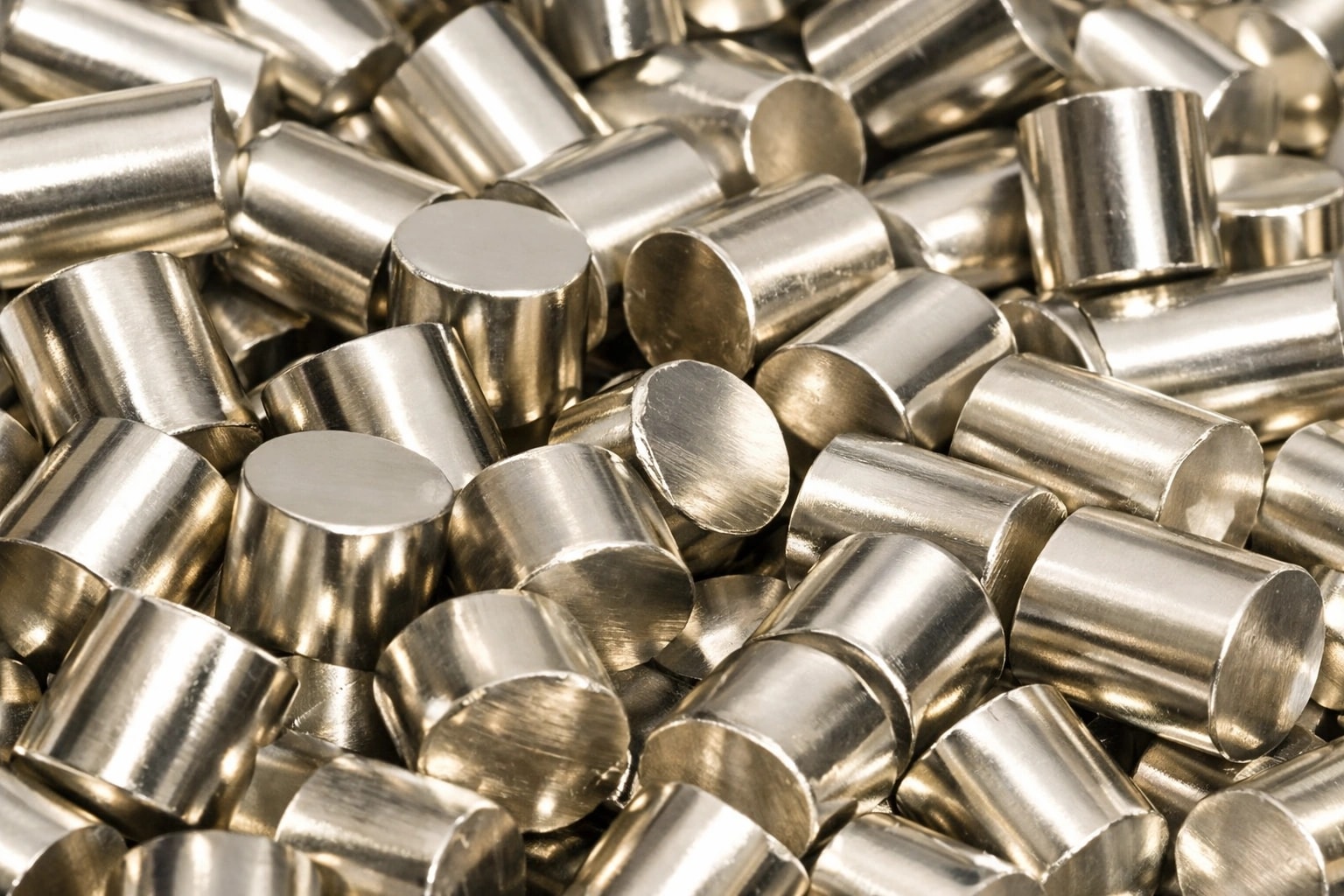
99.95% (3N5) / 99.995% (4N5) · 3–4 weeks
Nickel Evaporation Pellets
High-purity nickel pellets for magnetic thin films, under-bump metallisation and corrosion barrier layers.
View detailsAlso searched as: Cu pellets, copper evaporation slugs, OFHC copper pellets, copper evaporation material.