
Sputtering Targets
Titanium Sputtering Targets (Ti, 4N5)
Low-oxygen titanium targets for barrier, adhesion and TiN hard-coating processes, supplied to your cathode geometry.
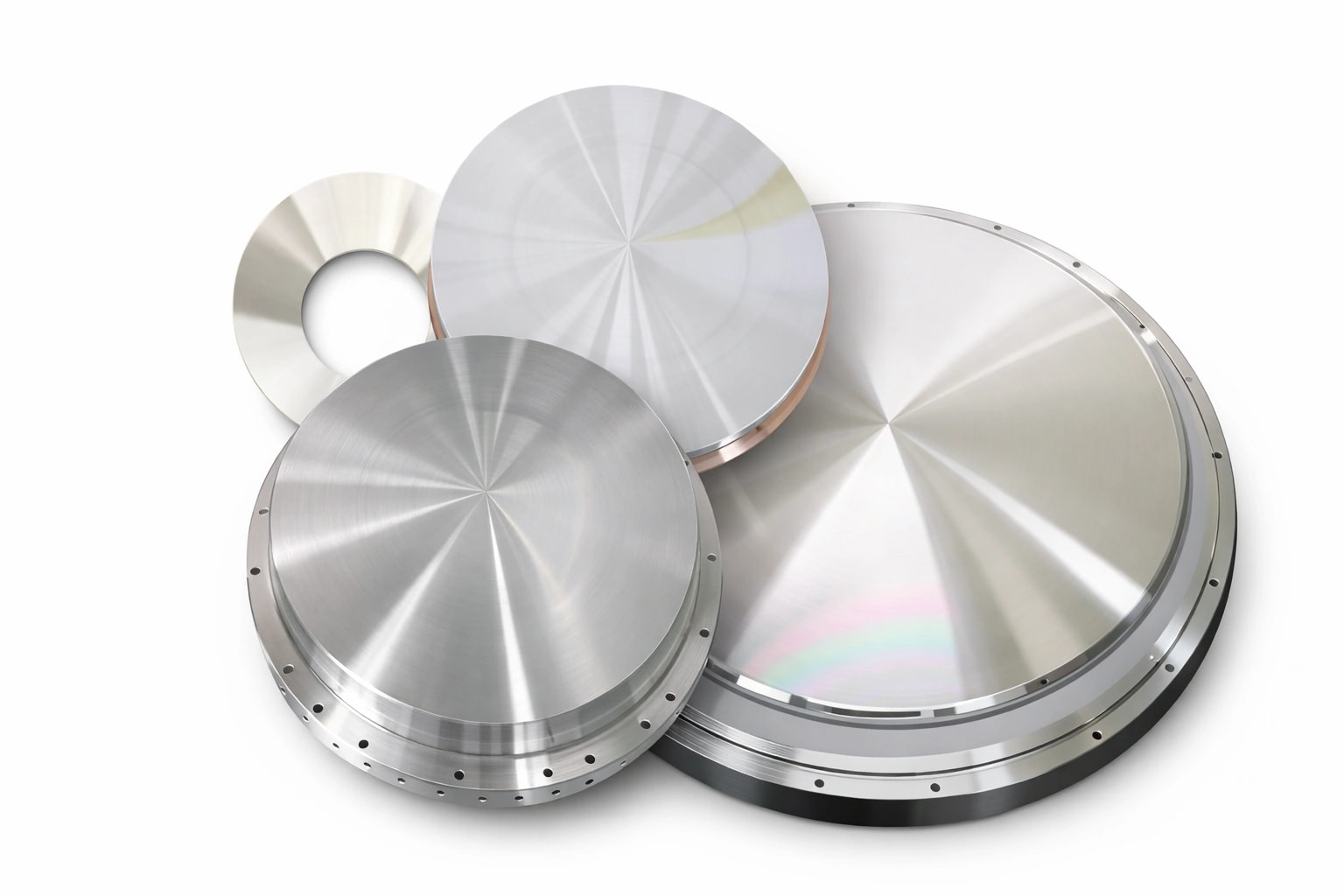
- Purity
- 99.995% (4N5)
- Lead time
- 4–6 weeks
- Qualified in
- Europe
- Documentation
- Certificate of analysis per batch
Purity up to 99.999%
5N material with certificate of analysis
Quote within 24 h
Technical review by materials engineers
Shipped from Europe
Dispatched inside the EU, customs handled at our end
Custom dimensions
Built to your tool and bonding spec
About titanium sputtering target
Titanium sits underneath almost every metallisation stack. As an adhesion layer it bonds metal films to oxide surfaces; reactively sputtered as TiN it forms the diffusion barrier that stops copper migrating into silicon.
Oxygen is the critical variable. Titanium is a powerful getter, and dissolved oxygen raises film resistivity and destabilises the reactive sputtering process window. We hold oxygen below 300 ppm and process under controlled atmosphere to keep the reactive transition point predictable.
Outside the fab, titanium targets produce the TiN and TiAlN hard coatings used on cutting tools, and the biocompatible films applied to medical implants.
Titanium Sputtering Target specifications
Standard specification below. Anything on this table can be changed — send us your drawing or tool model and we will quote to it.
| Purity | 99.995% (4N5), 99.99% (4N) standard grade |
|---|---|
| Form | Planar, rotary, disc, bonded |
| Standard dimensions | Ø50–450 mm, thickness 3–12 mm |
| Oxygen content | < 300 ppm |
| Grain size | Controlled, typically < 50 µm |
| Application | Ti/TiN barrier and adhesion layers |
Ordering for a UK site? Sputtering targets delivered to the UK duty paid — customs handled at our end.
Titanium material datasheet
Published constants for titanium — the numbers you need to set up a run before the material arrives. Print this page for the process folder, or send it to us with your parameters and we will tell you whether the grade we stock suits them.
Chemical identity
| Material | Titanium |
|---|---|
| Symbol | Ti |
| CAS number | 7440-32-6 |
| Atomic number | 22 |
| Atomic weight | 47.867 |
| Appearance | Silvery, metallic |
Physical and thermal properties
| Theoretical density | 4.5 g/cm³ |
|---|---|
| Melting point | 1,660 °C |
| Thermal conductivity | 21.9 W/m·K |
| Coefficient of thermal expansion | 8.6 × 10⁻⁶/K |
| Z ratio (QCM) | 0.628 |
Sputtering process data
| Sputter mode | DC |
|---|---|
| Max power density | 50 W/in² |
| Bonding | Indium or elastomer |
| Process notes | Alloys with W, Ta and Mo. Getters readily — expect gas evolution on first heating. |
Maximum power density is quoted for unbonded targets and is material specific. Bonded targets should be run at 20 W/in² or lower to avoid bond failure.
Values above are published material constants for process planning and can vary with grade, microstructure and measurement method. They are not a supply specification — what we guarantee on your order is the specification table above and the certificate of analysis shipped with it.
Source: Kurt J. Lesker Company, deposition materials data. CAS numbers from the public chemical registry entry for each element.
Applications
Barrier and adhesion layers
Ti and reactively sputtered TiN layers that anchor metallisation stacks and block copper diffusion into silicon.
Hard and decorative coatings
TiN, TiCN and TiAlN films on cutting tools, moulds and decorative hardware, deposited reactively in nitrogen or acetylene.
Medical device coatings
Biocompatible titanium films on implants and surgical instruments where surface chemistry drives osseointegration.
Optical and solar stacks
Index-matching and barrier layers within multilayer optical and photovoltaic coatings.
What we can change for you
- Grade 1 through Grade 5 titanium, plus high-purity 4N5 for semiconductor use.
- TiAl, TiZr and other alloy targets to your specified composition.
- Rotary targets in custom lengths for inline glass and web coaters.
- Bonded assemblies with ultrasonic bond-integrity reporting.
Technical notes
Low oxygen content keeps the reactive sputtering transition stable and repeatable.
Fine, controlled grain structure gives even erosion and predictable target life.
High density suppresses nodule growth during long reactive runs.
Titanium Sputtering Target — questions we get asked
Why is low oxygen content critical in titanium targets?
Titanium getters oxygen aggressively. Oxygen already dissolved in the target raises the resistivity of the deposited film and shifts the reactive sputtering transition point, making the TiN process window narrower and harder to control. Below 300 ppm the process behaves predictably; above roughly 1000 ppm most users see drift.
Can I use the same titanium target for both Ti and TiN layers?
Yes — TiN is deposited by sputtering a titanium target in a nitrogen atmosphere. The same target handles both the metallic adhesion layer and the reactive nitride barrier by switching process gas, which is exactly how most barrier-layer stacks are run.
What titanium grade should I specify for non-semiconductor coatings?
For hard coatings and decorative work, Grade 1 or Grade 2 commercially pure titanium is normally sufficient and considerably cheaper than 4N5. Specify high purity only where trace metals or oxygen directly affect your film properties.
Do you supply titanium targets for large-area glass coaters?
Yes. We supply rotary titanium targets in custom lengths for architectural and automotive glass lines, including bonding to backing tubes and matching to your end-block configuration.
Request a quote for titanium sputtering target
Send your specification and a materials engineer will price it — not a sales form auto-reply. Quotes for titanium sputtering target are returned within 24 hours.
Drawings, STEP files and photographs can be attached to the form. Prefer to talk it through? Leave a phone number and ask for a call.
What to include
- Purity grade — 99.995% (4N5) is standard
- Dimensions, tolerances or a drawing
- Quantity and required delivery date
No drawing? Send photographs of the worn part — we can work from that.
Related materials
Often specified alongside this product by the same customers.
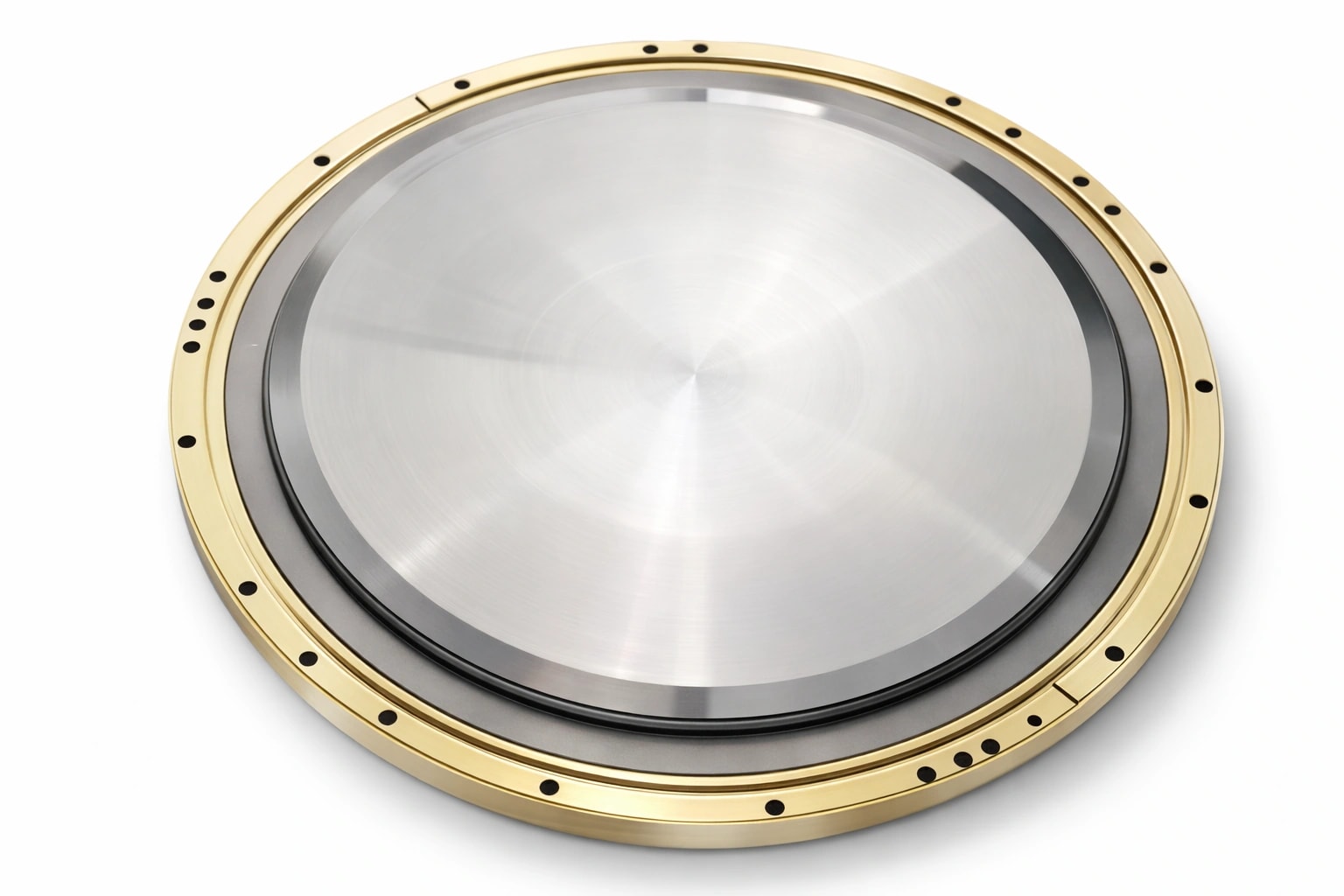
99.995% (4N5) · 3–5 weeks
Aluminium Sputtering Target
High-purity aluminium targets for semiconductor metallisation — supplied to your tool geometry with a certificate of analysis on every lot.
View details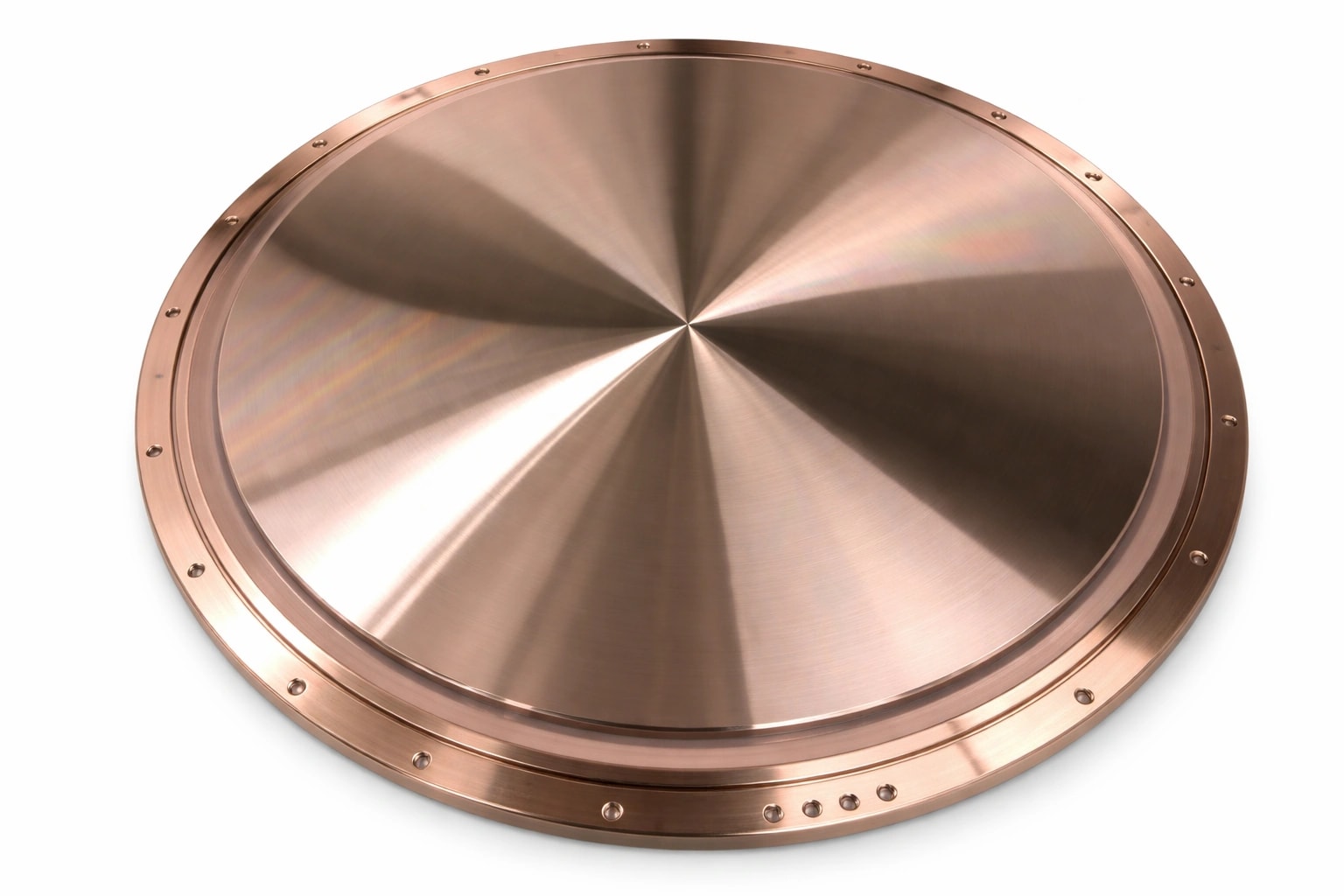
99.995% (4N5) · 3–5 weeks
Copper Sputtering Target
Oxygen-free high-purity copper targets for interconnect seed layers and conductive thin films, machined and bonded in Europe.
View details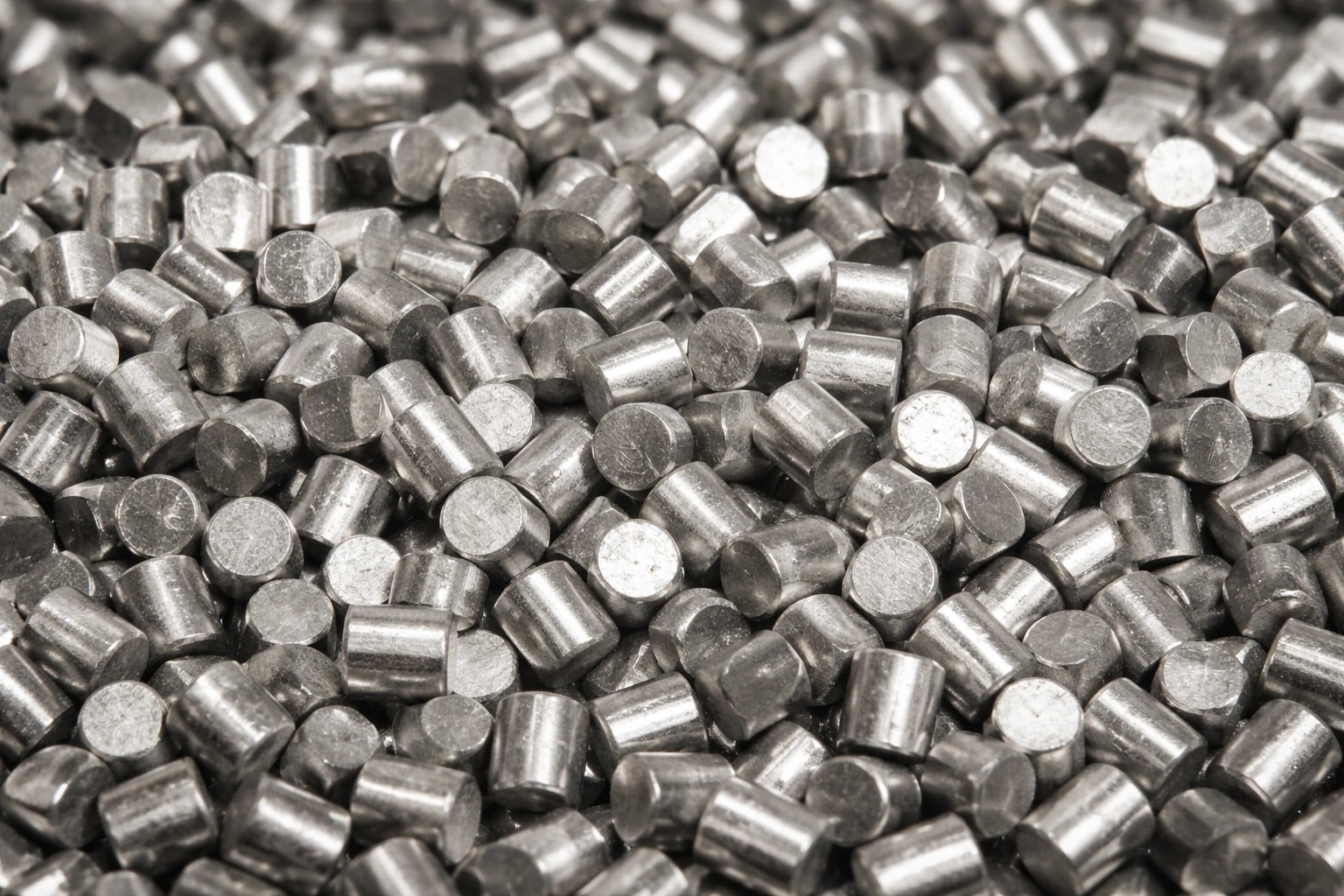
99.995% (4N5) · 3–4 weeks
Titanium Evaporation Pellets
Low-oxygen titanium pellets for adhesion layers, barrier films and titanium sublimation pumping.
View detailsAlso searched as: Ti sputtering target, titanium sputter target, TiN target, titanium PVD target.