
Evaporation Materials
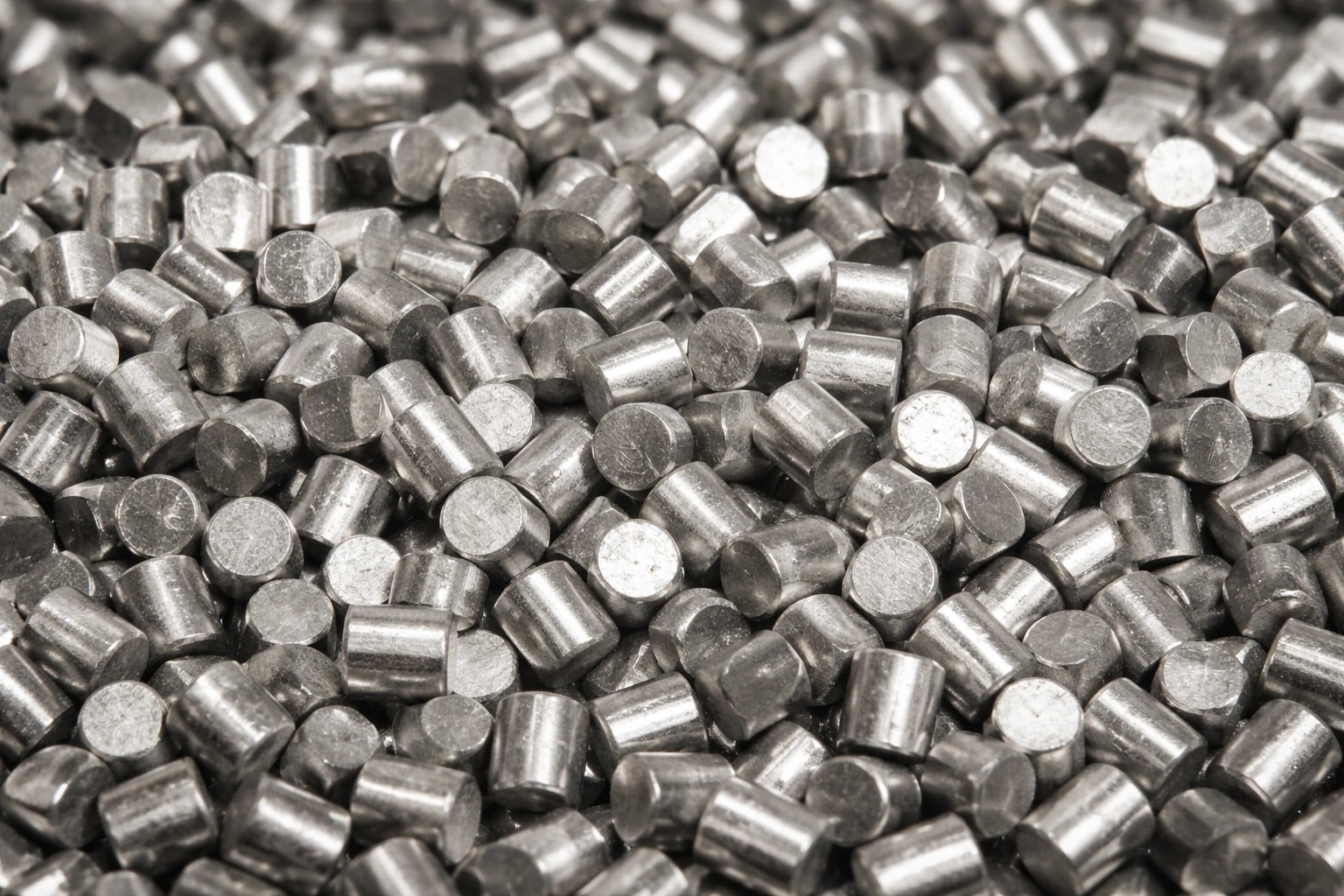
Titanium Evaporation Pellets & Slugs (Ti, 4N5)
Low-oxygen titanium pellets for adhesion layers, barrier films and titanium sublimation pumping.
- Purity
- 99.995% (4N5)
- Lead time
- 3–4 weeks
- Qualified in
- Europe
- Documentation
- Certificate of analysis per batch
Purity up to 99.999%
5N material with certificate of analysis
Quote within 24 h
Technical review by materials engineers
Shipped from Europe
Dispatched inside the EU, customs handled at our end
Custom dimensions
Built to your tool and bonding spec
About titanium evaporation pellets
Titanium is the near-universal adhesion layer in evaporated metal stacks. A few nanometres of titanium between an oxide substrate and a gold, copper or platinum film transforms adhesion from marginal to reliable — it is the single cheapest yield improvement available in most lift-off processes.
Titanium's 1668 °C melting point puts it firmly in e-beam territory; resistive boats cannot reach it. It also getters aggressively, which is useful in titanium sublimation pumps but means the source material's own oxygen content matters.
We supply 4N5 high-purity titanium for semiconductor and research use, and commercially pure Grade 1 and Grade 2 where the application is less sensitive and cost dominates.
Titanium Evaporation Pellets specifications
Standard specification below. Anything on this table can be changed — send us your drawing or tool model and we will quote to it.
| Purity | 99.995% (4N5), Grade 1/2 CP titanium also available |
|---|---|
| Form | Pellets, slugs, wire, sponge |
| Pellet size | Ø3 × 3 mm to Ø12 × 12 mm |
| Oxygen content | < 500 ppm |
| Melting point | 1668 °C |
| Typical source | E-beam pocket (graphite or copper hearth) |
Titanium material datasheet
Published constants for titanium — the numbers you need to set up a run before the material arrives. Print this page for the process folder, or send it to us with your parameters and we will tell you whether the grade we stock suits them.
Chemical identity
| Material | Titanium |
|---|---|
| Symbol | Ti |
| CAS number | 7440-32-6 |
| Atomic number | 22 |
| Atomic weight | 47.867 |
| Appearance | Silvery, metallic |
Physical and thermal properties
| Theoretical density | 4.5 g/cm³ |
|---|---|
| Melting point | 1,660 °C |
| Thermal conductivity | 21.9 W/m·K |
| Coefficient of thermal expansion | 8.6 × 10⁻⁶/K |
| Z ratio (QCM) | 0.628 |
Evaporation process data
| E-beam | Excellent |
|---|---|
| Thermal evaporation techniques | Boat: W · Crucible: TiC, TiB₂–BN |
| E-beam crucible liner | FABMATE®, intermetallic |
| Temperature at 10⁻⁸ Torr | 1,067 °C |
| Temperature at 10⁻⁶ Torr | 1,235 °C |
| Temperature at 10⁻⁴ Torr | 1,453 °C |
| Suggested QCM crystal | Alloy |
| Process notes | Alloys with W, Ta and Mo. Evolves gas on first heating. |
Values above are published material constants for process planning and can vary with grade, microstructure and measurement method. They are not a supply specification — what we guarantee on your order is the specification table above and the certificate of analysis shipped with it.
Source: Kurt J. Lesker Company, deposition materials data. CAS numbers from the public chemical registry entry for each element.
Applications
Adhesion layers
Ti seed layers under Au, Cu, Pt and Ag films on oxide and glass substrates, typically 5–20 nm.
Diffusion barriers
Ti and TiN layers preventing interdiffusion between metallisation and silicon.
Titanium sublimation pumps
Getter material in UHV systems, where titanium's affinity for reactive gases is the pumping mechanism.
Biomedical coatings
Biocompatible titanium films on implants and instruments.
What we can change for you
- Pellet and slug sizes matched to your e-beam pocket.
- 4N5 high purity or commercially pure Grade 1 and Grade 2 depending on application.
- Titanium wire for sublimation pump filaments.
- Vacuum packaging to limit oxygen pick-up in storage.
Technical notes
Low oxygen content keeps deposited film resistivity down and the reactive process window stable.
High purity avoids trace metal contamination in adhesion layers under noble metals.
Consistent pellet mass makes e-beam charge management straightforward.
Titanium Evaporation Pellets — questions we get asked
How thick should a titanium adhesion layer be?
5–20 nm covers almost every case. Below about 3 nm the film is not continuous and adhesion becomes unreliable; above 20 nm you gain nothing and, under a noble metal, risk titanium diffusing into the top layer over time or at elevated temperature.
Can titanium be evaporated from a resistive source?
Not practically. At 1668 °C, titanium exceeds what tungsten and molybdenum boats will survive, and molten titanium attacks both. E-beam evaporation with a graphite or water-cooled copper hearth is the standard approach.
Why does titanium need a liner in the e-beam hearth?
Molten titanium reacts with most crucible materials. A graphite liner is common and works well for short runs, though some carbon pick-up occurs. For the cleanest films, evaporate from a water-cooled copper hearth where a solid skull of titanium isolates the melt from the crucible.
What is the difference between 4N5 and Grade 2 titanium for evaporation?
Grade 2 commercially pure titanium contains up to around 2500 ppm oxygen plus iron and carbon; 4N5 holds total impurities below 50 ppm. For adhesion layers under noble metals in semiconductor work, use 4N5. For decorative or general vacuum coating, Grade 2 is usually adequate and much cheaper.
Request a quote for titanium evaporation pellets
Send your specification and a materials engineer will price it — not a sales form auto-reply. Quotes for titanium evaporation pellets are returned within 24 hours.
Drawings, STEP files and photographs can be attached to the form. Prefer to talk it through? Leave a phone number and ask for a call.
What to include
- Purity grade — 99.995% (4N5) is standard
- Dimensions, tolerances or a drawing
- Quantity and required delivery date
No drawing? Send photographs of the worn part — we can work from that.
Related materials
Often specified alongside this product by the same customers.
99.995% (4N5) · 4–6 weeks
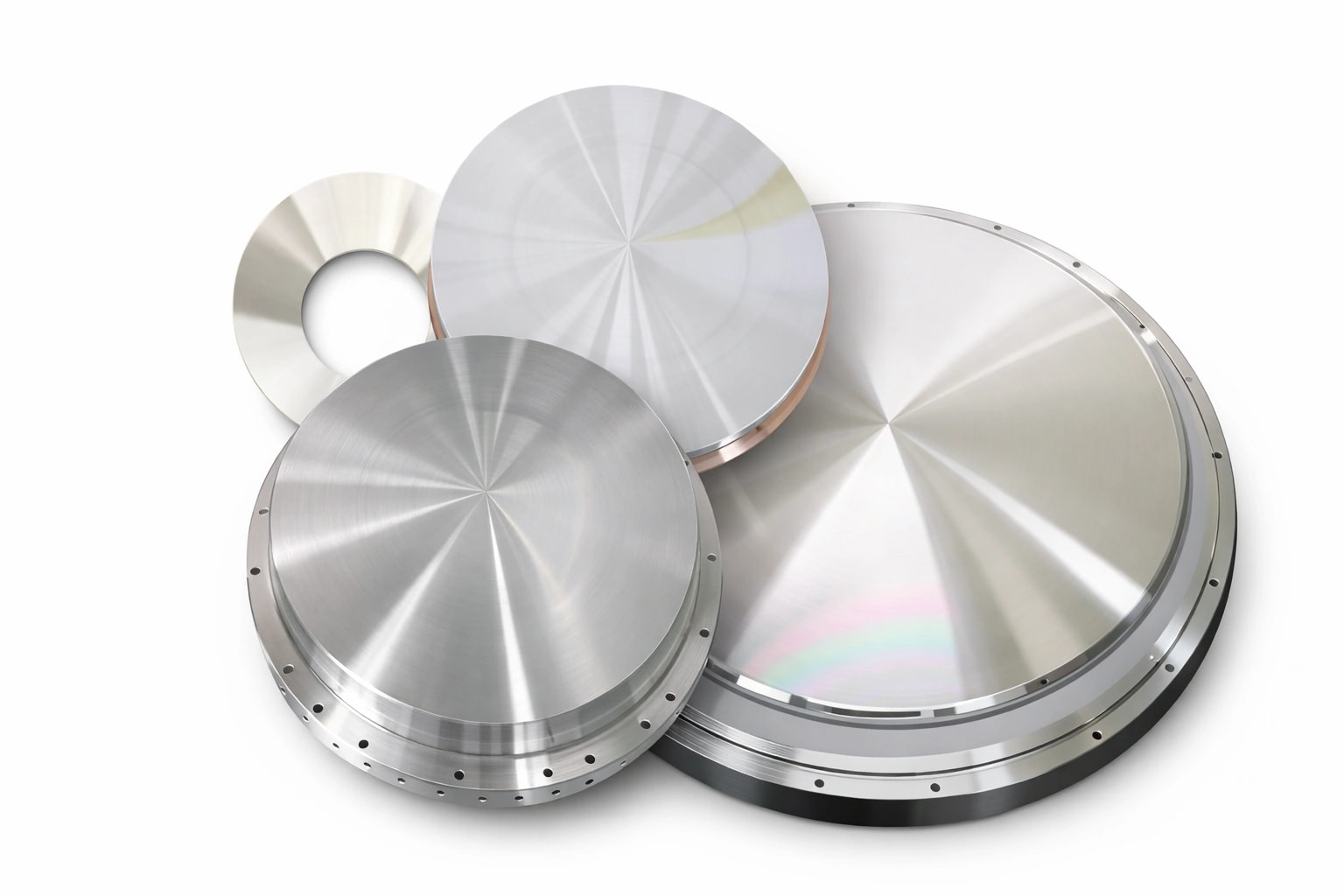
Titanium Sputtering Target
Low-oxygen titanium targets for barrier, adhesion and TiN hard-coating processes, supplied to your cathode geometry.
View details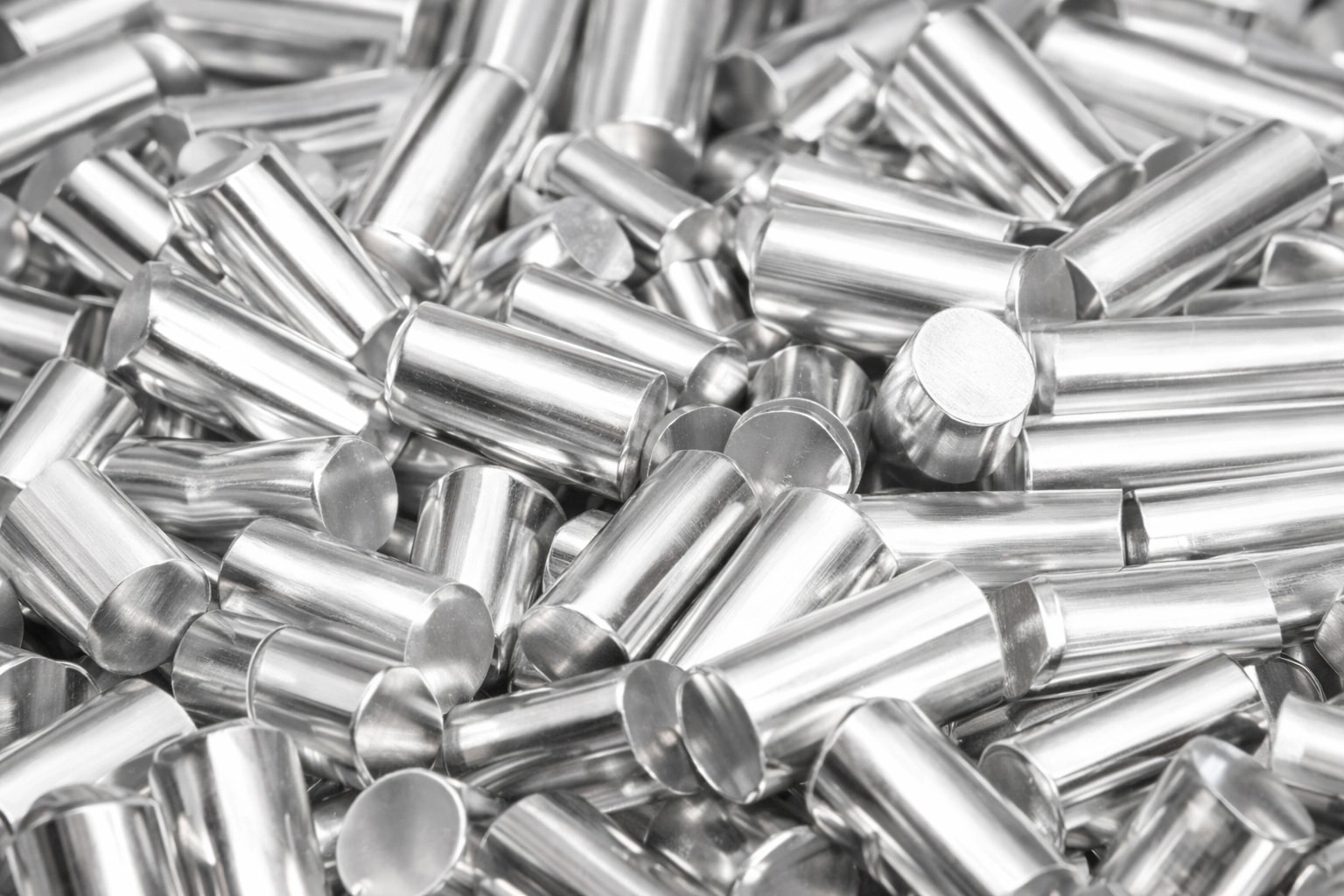
99.995% (4N5) · 2–3 weeks
Aluminium Evaporation Pellets
Clean, oxide-free aluminium pellets sized for e-beam crucibles and tungsten boats, supplied with a certificate of analysis.
View details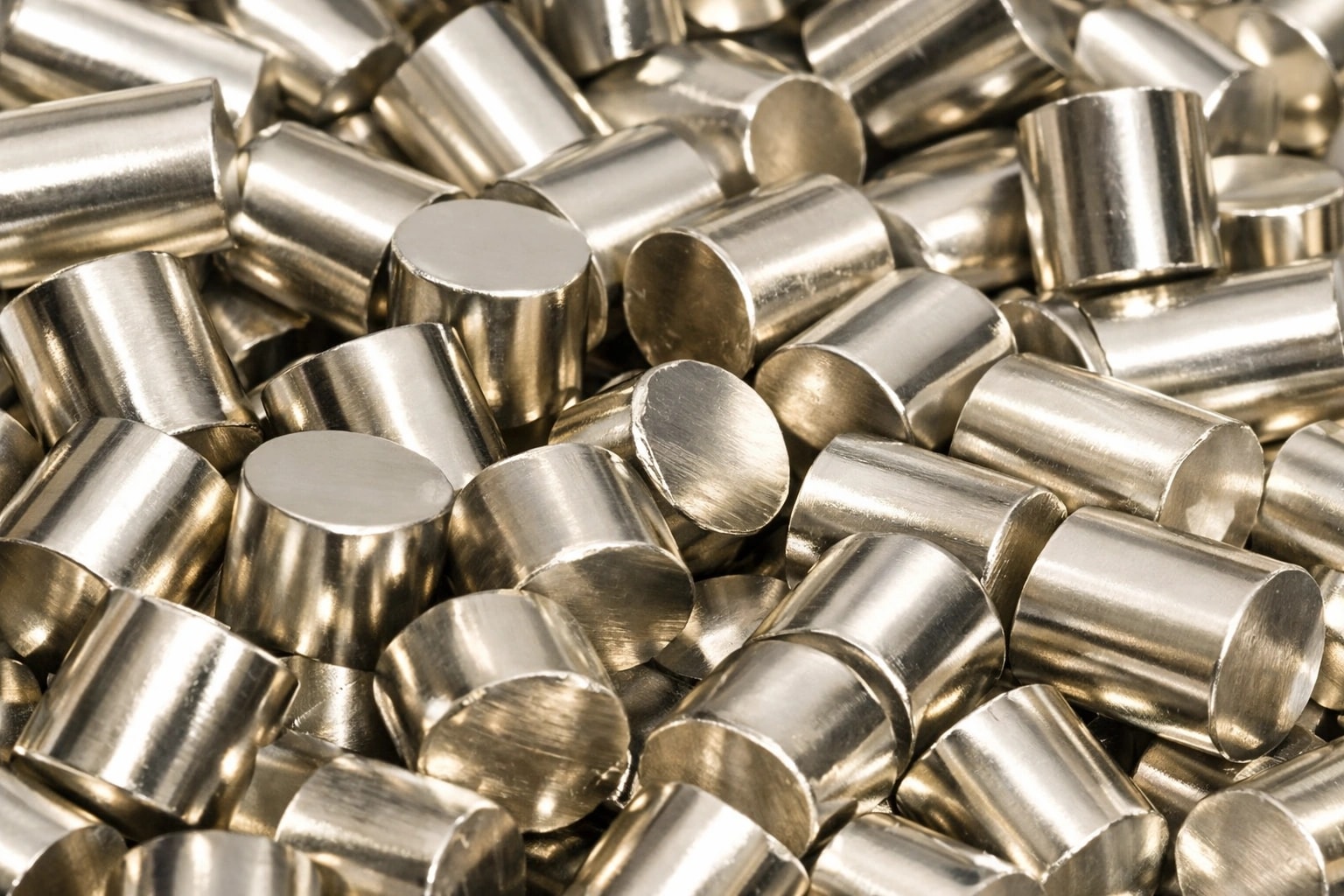
99.95% (3N5) / 99.995% (4N5) · 3–4 weeks
Nickel Evaporation Pellets
High-purity nickel pellets for magnetic thin films, under-bump metallisation and corrosion barrier layers.
View detailsAlso searched as: Ti pellets, titanium evaporation slugs, titanium getter material, Ti evaporation source.